

Breaking into search results isn’t easy when you’re a freelance writer competing with established brands, agencies, and seasoned SEO teams. That’s where AI competitor analysis for SEO changes the game. Instead of guessing what works, you can use AI tools to uncover exactly why competitor content ranks, then use those insights to craft smarter, sharper articles for your clients.
Think of it as an inside look at your rivals’ playbook. AI shows which keywords they target, how they structure content, and where the gaps lie. With that knowledge, you move from simply writing to delivering content that climbs higher and works harder. For freelancers, that means stronger pitches, better results, and a clear edge in a crowded market. This matters because organic search still drives a huge share of visibility online—BrightEdge’s channel-share research shows that organic search accounts for about 53% of all trackable website traffic, making it the single biggest digital channel.
Everything I’ve shared here—and more—is in my book, available on Amazon. Click the link if you’re ready to take the next step.
AI Competitor Analysis for SEO: Why It Matters for Freelance Writers
Why do some articles race to the top of search results while others vanish from view? For freelance writers, the difference often comes from mastering AI competitor analysis for SEO.
Spotting Content Gaps
Every niche has blind spots. Competitors miss topics, leave questions half answered, and overlook useful formats. AI tools scan top-ranking pages and flag these gaps in minutes. Imagine pitching a client a blog idea that fills a niche before anyone else. That is how you turn insights into paying projects.
Understanding What Ranks
Before, analyzing what made a competitor’s article perform meant manually combing through word counts, keyword density, and structure. Now, AI platforms instantly surface all of that. You can see which headings, subtopics, and even sentence styles help content stand out. The more you know about what drives rankings, the easier it is to reverse-engineer winning strategies for your clients.
AI Competitor Analysis for SEO in Practice
Here’s a quick example: let’s say your client runs a travel blog. Competitor sites dominate with “Top 10” guides. AI analysis might reveal they rarely include video embeds or fresh stats. You can step in with a multimedia-rich piece backed by updated data, making your client’s content more engaging and authoritative.
AI Competitor Analysis for SEO: Tools Every Freelancer Should Know
Choosing the right AI tools can turn competitor analysis from guesswork into a game plan. For freelancers, these platforms are the difference between writing content that blends in and content that consistently outranks the competition.
AI-Powered SEO Platforms
Platforms like Surfer SEO, Clearscope, and Frase use machine learning to compare your draft with top-performing content. For example, Surfer’s content editor highlights missing terms in real time, while Clearscope scores readability and keyword coverage on a simple A–F scale. Frase generates instant content briefs based on SERPs, showing you what to include and what competitors missed. As a freelancer, this means you can deliver polished and strategically optimized drafts.
Keyword Discovery Made Simple
AI pushes keyword research past simple lists. It groups related terms into clusters, analyzes search intent, and reveals which keywords competitors rank for that your client doesn’t. For example, SEMrush’s Keyword Gap tool surfaces missed opportunities side by side. Meanwhile, Surfer recommends secondary terms you can weave into the draft. Target these overlooked queries to attract new streams of traffic for your clients.
Using AI Competitor Analysis for SEO to Save Time
Instead of juggling five dashboards, AI puts insights in one place. SEMrush shows backlink profiles, Clearscope surfaces semantic keywords, and Surfer benchmarks your draft against live competitors, all within minutes. You save hours and spend more time writing. More importantly, you base your work on the same competitive data that agencies rely on. That matches broader trends in marketing: recent research on AI in marketing found that 93% of marketers use AI to generate content faster, 81% use it to uncover insights, and 83% say AI frees up time for more strategic or creative work—exactly the kind of leverage you gain when you lean on AI for competitor analysis.
Step-by-Step: Running Your First AI Competitor Analysis
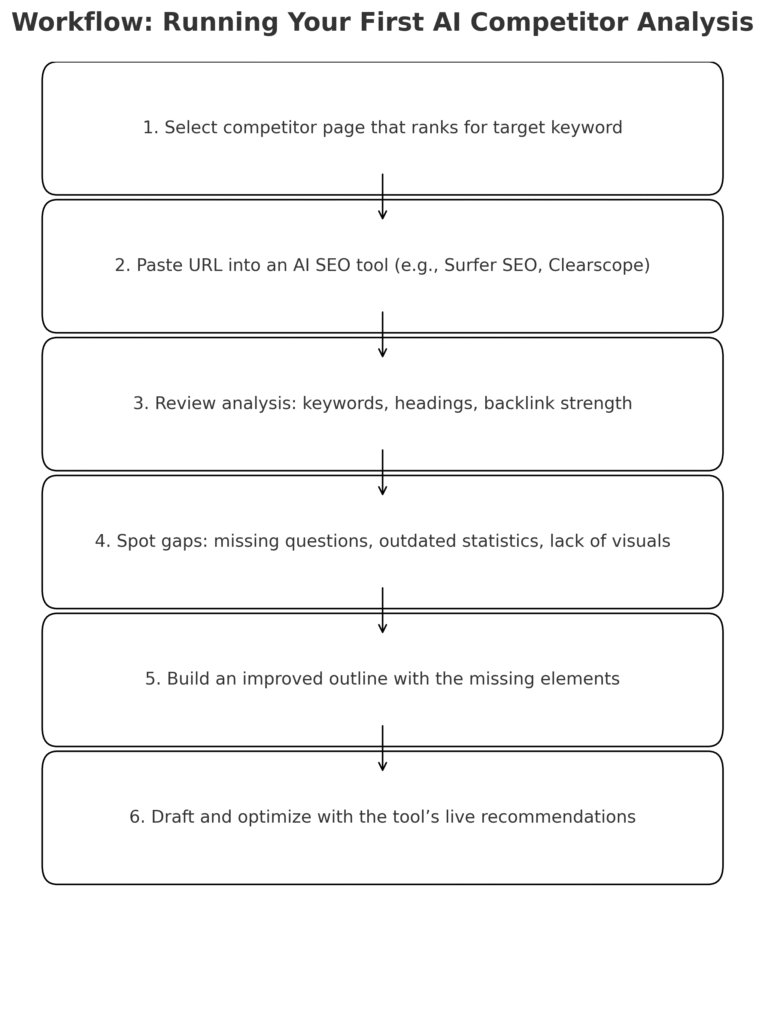
Figure 1. Workflow showing the six steps to run your first AI competitor analysis, from selecting a page to drafting optimized content.
Comparison of Top AI Competitor Analysis Tools
| Tool | Best For | Key Features | Pricing (as of 2025) |
| Surfer SEO | Freelancers writing optimized blogs | Content editor, live competitor analysis, keyword suggestions | From $29/mo |
| Clearscope | Agencies & premium projects | AI-driven keyword coverage, readability scoring, and detailed SERP analysis | From $170/mo |
| Frase | Freelancers on a budget | Brief generator, content scoring, SERP snapshots | From $14.99/mo |
| SEMrush | All-in-one SEO pros | Keyword gap analysis, backlink tracking, and domain insights | From $129/mo |
(Pricing may vary; always check official sites for updated plans.)
Case Example: From Gaps to Rankings
A freelance writer analyzed a competitor’s blog post about “best productivity apps” using Frase. The tool showed that while competitors covered features, none addressed pricing tiers. The writer added a pricing comparison chart, optimized the content with suggested keywords, and pitched it to their client.
Within six weeks, the new article ranked in the top five on Google and boosted the client’s organic traffic by 28%. That measurable result turned into a testimonial and two new client referrals.
The takeaway? Competitor analysis with AI enhances content and yields tangible business outcomes that you can showcase in your portfolio.
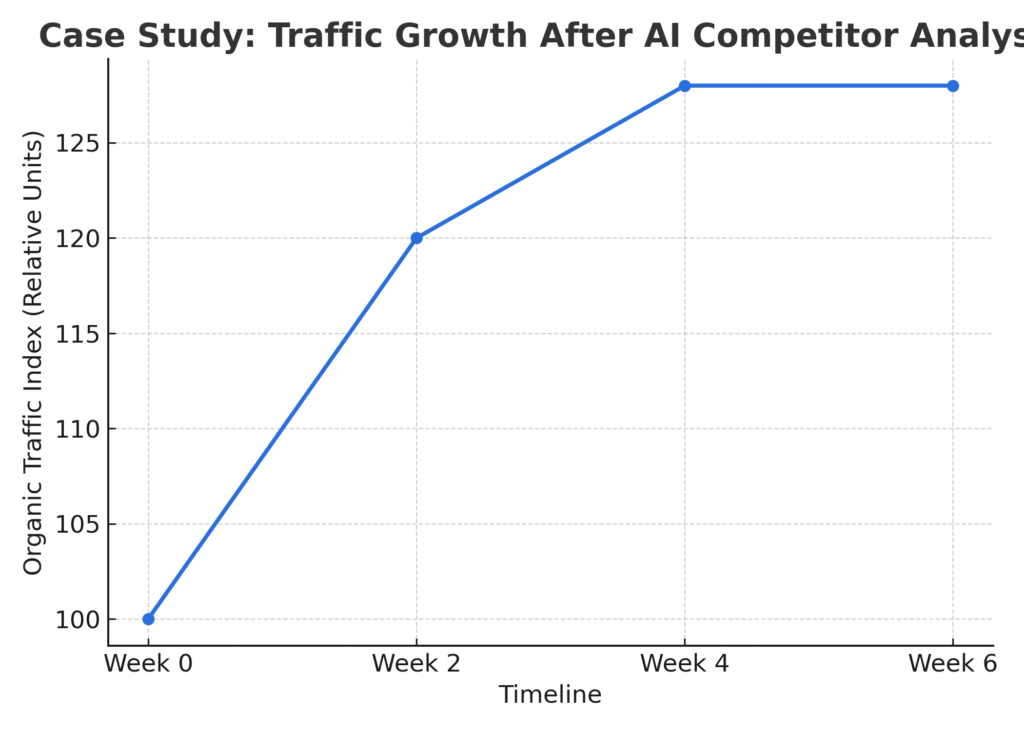
Figure 2. Case study results: a freelance writer’s optimized article drove a 28% increase in organic traffic within six weeks after applying AI competitor analysis.
AI Competitor Analysis for SEO: Turning Insights into Content Wins
Insights only matter if you can turn them into action. For freelance writers, that means pitching smarter ideas, producing stronger drafts, and positioning yourself as a strategist, not just a scribe.
Crafting Content That Outshines Competitors
When AI shows that competitors’ posts are thin on examples or lack updated statistics, you know exactly where to shine. Add real-world case studies, original research, or expert quotes. Suddenly, your client’s content becomes the go-to resource, not just another blog on the pile.
Building Smarter Outlines with AI Data
AI can generate outlines based on what competitors rank for. That does not mean you should copy them. Learn the structure Google already favors and layer in unique angles. If competitors use generic subheads, add deeper, niche-specific questions. When you apply AI insights, your outlines gain a stronger foundation and a better chance to rank.
AI Competitor Analysis for SEO as Your Writing Edge
When you include AI competitor analysis for SEO in your pitch, you’re not just saying “I write blogs.” You’re saying, “I deliver content that beats the competition.” That difference helps you charge higher rates, win more projects, and establish yourself as the kind of freelancer businesses want long-term.
AI Competitor Analysis for SEO: Freelance Growth Beyond Rankings
SEO success matters, but the real prize is how these skills grow your freelance career.
Attracting Higher-Value Clients
Freelancers selling $20 blog posts crowd the market. Clients want a writer who links content to results. Demonstrate how you utilize AI SEO tools for competitor research to stand out. Clients who hire you buy more than words. They buy rankings, traffic, and leads.
This is where SEO economics become powerful. Industry research shows that SEO leads have a 14.6% close rate, while outbound leads (like cold calls or direct mail) convert at only 1.7%—a huge gap that explains why clients care so much about ranking content. When you tie AI competitor analysis to that kind of performance, your work becomes directly connected to revenue.
Scaling Your Workflow with AI
Freelancers who spend all day on research earn less because they have no time left for writing. AI compresses research hours into minutes. That means you can serve more clients, or use the extra time to build authoritative content for your own portfolio. Either way, it’s a force multiplier.
Future-Proofing Your Freelance Career
SEO and content marketing keep changing. AI has evolved from a passing trend to a baseline. Learn to integrate AI into your AI writing workflows now to future-proof your skills. You’ll be ready to adapt to new search behaviors, algorithm updates, and client expectations. That adds long-term security in a freelance world that often feels unstable.
AI Competitor Analysis for SEO: How to Present Insights to Clients
Knowing how to run competitor analysis is powerful, but knowing how to present your findings is what makes clients see your value.
- Create a one-page summary that highlights the strengths and weaknesses of your competitors.
- Point out quick wins: Keywords or topics your client can target immediately.
- Propose a content roadmap that includes new posts, updates, and multimedia formats.
- Show potential ROI by explaining how these improvements can drive traffic or leads.
Package insights into client-friendly takeaways and elevate your role from “just a writer” to a strategic partner who drives business growth.
Final Thoughts
Freelance writers who learn AI competitor analysis for SEO gain more than insights into what works. They gain an edge in a crowded market. Identify content gaps, use the right tools, present clear insights, and turn data into actionable strategies. With that approach, you can pitch ideas that win, create content that ranks, and position yourself as a trusted advisor. Clients will notice the difference between a writer who “just writes” and a writer who brings competitor intelligence to the table.
Ready to elevate your freelance writing career? Start integrating AI competitor analysis for SEO into your workflow today. Run your first analysis, package the insights for a client, and observe how it alters their perception of your work.
Frequently Asked Questions About AI Competitor Analysis
It’s the process of identifying who you’re really competing with in search results, then studying their keywords, content, and backlinks so you can spot gaps and opportunities to outrank them.
Start by Googling your target keywords, list the sites that consistently rank on page one, then use AI SEO tools to review their keywords, content structure, and links. From there, you map what they’re doing well—and where you can create something better.
It shows you what’s already working in your niche, where competitors are vulnerable, and which topics or keywords they’ve missed. That insight helps you create higher-value content instead of guessing what might rank.
Freelancers often use platforms like Surfer SEO, Clearscope, Frase, and SEMrush to compare content, find keyword gaps, and benchmark their drafts against top-ranking pages.
At minimum, run a fresh analysis when you start with a new client, plan a major content push, or notice rankings slipping. In competitive niches, checking key competitors every month or quarter keeps your strategy current.

Florence De Borja is a freelance writer, content strategist, and author with 14+ years of writing experience and a 15-year background in IT and software development. She creates clear, practical content on AI, SaaS, business, digital marketing, real estate, and wellness, with a focus on helping freelancers use AI to work calmer and scale smarter. On her blog, AI Freelancer, she shares systems, workflows, and AI-powered strategies for building a sustainable solo business.


Pingback: AI-Powered Editing Tools: Ginger & Autocrit Review - The AI Freelancer