

You’re not short on ideas. You’re short on proof. You pitch topics, map out content calendars, and write your best work—then a client asks, “What data is this based on?” Suddenly, all your reasoning feels a bit soft. You know the audience, but you don’t always have charts or numbers to back that up. That’s exactly where AI market analysis tools can protect your confidence and strengthen your pitches.
Rather than guessing what will resonate, you can lean on AI to spot trends, read audience behavior, and turn the numbers into concrete content plans without working as a full-time analyst.
Everything I’ve shared here—and more—is in my book, available on Amazon. Click the link if you’re ready to level up.
How AI Market Analysis Tools Reveal New Opportunities
You’ve probably had that nagging feeling after you publish a piece: Did I miss something bigger happening in this market? When you rely only on intuition, you can easily overlook early signals—new pain points, fresh competitors, or shifting interests. AI market analysis tools actively scan what people search for, share, and talk about, then highlight patterns you can turn into timely, high-impact ideas.
Market Analysis Basics For Freelance Writers
For a freelance writer, “market analysis” simply means understanding who your client serves, what those people care about right now, and how that’s changing over time. In the past, this meant manually reading industry reports, scrolling forums, and skimming endless blog posts.
With AI-driven market research tools, you can offload much of that grunt work. These platforms pull data from multiple sources—search behavior, news, social platforms, customer feedback—and surface patterns in plain language. Instead of raw spreadsheets, you get summaries of key topics, recurring questions, and early signals of change.
Your job stays the same: turn insight into clear, persuasive content. The difference is that now your ideas are grounded in visible demand rather than intuition alone.
To make this more concrete, imagine you’re writing for a project management SaaS. You feed a set of competitor blogs, review pages, and forum threads into an AI research tool. It comes back with a simple summary: most conversations cluster around onboarding confusion, pricing transparency, and integrations with existing tools. Right away, you’ve got three validated angles for blog series, case studies, and comparison guides—rooted in what the market is already talking about.
Why Trend Forecasting Helps You Pitch Strategy
Clients are under pressure to make smarter, data-backed decisions. AI is becoming normal in their world, not special. The 2025 Stanford AI Index report notes that 78% of organizations reported using AI in 2024, up from 55% the year before, showing how quickly AI has moved from an experiment to everyday infrastructure.
When you bring even simple trend forecasting into your work, you move from “content vendor” to “strategic partner.” You can say things like:
- “Interest in this topic has risen steadily over the last six months.”
- “Your competitors cover the basics, but no one explains this specific pain point.”
- “Your audience is asking these related questions—we can build a series around them.”
Trend insights give you stronger reasons behind your recommendations. That makes it easier to defend your ideas, justify your rates, and secure longer-term strategy work.
Quick Research Wins With AI Market Analysis Tools
You don’t have to master every feature inside an analytics platform to benefit. Start with quick, repeatable wins:
Ask an AI assistant connected to your data (search, analytics, or basic research tools) questions like:
- “What topics are mentioned most often in competitor content this quarter?”
- “Which blog posts on this site get the longest time on page?”
- “What related queries are people searching around this keyword?”
In a few minutes, you can see which themes are gaining traction, which posts actually hold attention, and which gaps you can fill. You still decide what to pitch and how to write it; AI market analysis tools get you to clearer answers faster.
Using AI Market Analysis Tools To Know Your Audience
When “the audience” is just a vague blob in your head, writing for them feels guessy and flat. One client insists their readers are beginners, but your analytics show most visitors behave like experienced buyers. When you bring AI into the process, you stop guessing. These tools read the messy data—clicks, searches, page views—and give you a clear picture of who actually shows up, what they care about, and how to speak their language, without spending hours buried in reports.
Turn Client Data Into Simple Insights
Clear, effective content begins with a real picture of your audience. When your tools break messy data into meaningful signals, it’s much easier to decide what to create next.
By analyzing website behavior, search queries, and basic customer information, these tools highlight patterns like:
- New visitors gravitate toward beginner guides
- Returning readers are spending more time on comparison or “how-to” content
- High-intent visitors viewing service pages and pricing more than once
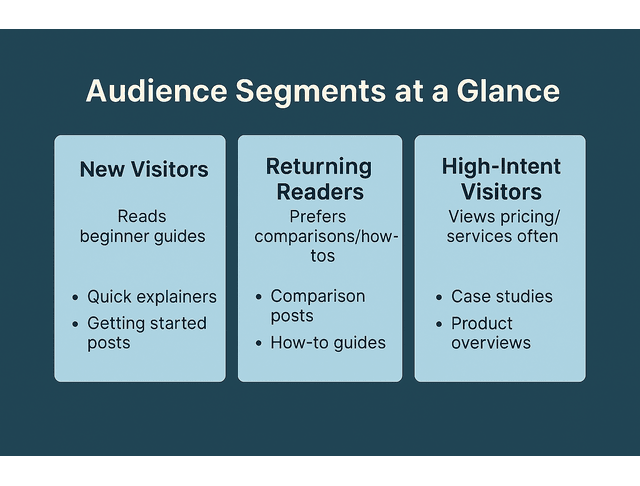
This is customer segmentation in practice. Instead of writing one-size-fits-all content, you can craft pieces for different groups: new readers, serious buyers, or people still evaluating options. AI helps you see those segments more clearly, so your writing feels more targeted and relevant.
Validate Content Ideas With Real Demand
Before you invest hours in a draft, you can ask a simple question: “Is anyone actually looking for this?”
AI-powered keyword and trend platforms let you:
- See search volume and intent for your topic
- Track whether interest is rising, flat, or declining
- Discover related questions people type into search engines
Across the industry, this shift toward data-backed content is part of a much bigger wave. Recent stats show that the AI in marketing market is valued at about $47.32 billion in 2025 and is projected to reach around $107.5 billion by 2028, driven by demand for personalization and data-led campaigns.
When you use the same mindset—checking content ideas against real demand—you align with how your clients already make marketing decisions.
To keep this manageable, you can use a simple three-check rule for new ideas:
- Is search interest trending up rather than flat or declining?
- Is competition reasonable for your client’s authority level?
- Does the topic connect directly to a product, service, or key audience segment?
If an idea passes all three, it moves to your shortlist. If it fails one or more, you park it for later instead of burning time on a low-upside draft.
For example, before using this rule, you might spend a week drafting a long-form guide that never ranks or gets used. After applying it, you might instead choose a topic with rising interest, realistic competition, and a direct tie to your client’s onboarding offer—immediately increasing the odds that your work drives results.
AI Market Analysis Tools For Beginner Workflows
If you’re just getting started, keep your workflow light and simple:
- Use AI connected to analytics or search tools to list your client’s top-performing pages, topics, and audience questions.
- Ask the tool to summarize patterns: “What are the three main problems visitors care about most?”
- Turn those patterns into article ideas, content clusters, and pitches for future campaigns.
You stay in your zone—clarity, storytelling, structure.
Suppose you’re also exploring how to streamline your daily writing tasks. In that case, pairing these insights with AI writing productivity tools and AI research tools can give you a complete system from idea validation to draft creation.
AI Market Analysis Tools For Smarter Content Strategy
Once you can see who you’re really writing for and what they care about, the next step is deciding what to do with that insight.
If your content calendar still starts with “What should we post this month?”, you’re working harder than you need to.
With AI in the mix, you can see which topics are rising, which formats keep people engaged, and where your client’s competitors are asleep at the wheel. With those insights, your strategy stops being a best guess and becomes a focused plan backed by real market signals.
Spot Rising Topics Before Competitors
One of the most powerful ways freelancers can use AI is to spot emerging trends early. Some platforms actively scan industry news, social conversations, and search data, then flag topics that are starting to spike but still have little competing content.
This lets you pitch ahead of the curve. You can approach a client with a short overview:
- What’s changing in the market
- Why this topic matters to their audience
- How a targeted content series could position them as a go-to source
Instead of reacting to what everyone else is already writing about, you help clients lead the conversation—making your strategic input more visible and valuable.
For instance, imagine your AI monitoring shows “freelancer AI policy templates” moving from almost no search volume to steady growth. At the same time, major competitors have only one or two shallow posts on the topic. That’s your cue to propose a deep guide, a resource library, and a lead magnet bundle on that topic—before the rest of the market catches up.
Turn Insights Into Client-Friendly Calendars
Most clients don’t want raw dashboards. They want to know what to publish, when, and why. This is where your editorial planning skills meet data-driven content strategy.
You can use insights from AI market analysis tools to:
- Choose monthly themes aligned with audience interests and product priorities
- Map content to the buyer journey—from awareness posts to decision-stage case studies
- Plan supporting assets like emails, lead magnets, and social content around key campaigns
You’re translating complex signals into a simple calendar that your client can approve quickly. That clarity can be the difference between “nice ideas” and a signed retainer.
A simple example:
- Month theme: “AI onboarding for small teams” based on rising interest and strong performance for related posts.
- Week 1: Awareness blog—“What AI Onboarding Really Looks Like For Small Teams.”
- Week 2: Consideration blog—“AI Onboarding Checklists Your Team Can Actually Use.”
- Week 3: Case-style post—“How One Team Cut Ramp-Up Time By 30% With AI.”
- Week 4: Lead magnet + email—downloadable onboarding template promoted across the list and social.
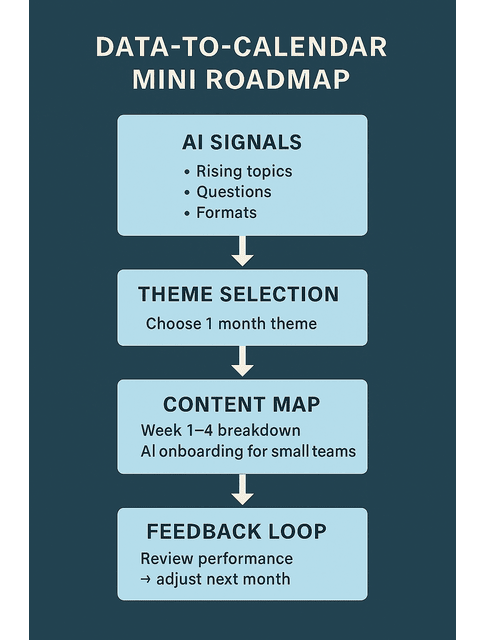
All of that flows from a few clear signals surfaced by your tools, then shaped into a plan by you.
Use AI Market Analysis Tools To Strengthen Recommendations
Whenever you recommend a shift—doubling down on a topic, dropping a low-performing series, or testing a new format—you can support it with evidence.
AI is already becoming standard in market research. A Qualtrics-backed trends analysis notes that 89% of researchers are already using AI tools regularly or experimentally, and 83% say their organizations plan to increase AI investment significantly.
When you show simple, clear signals—rising interest, stronger engagement, better fit with audience questions—you’re no longer asking clients to trust your gut alone. You’re presenting recommendations grounded in the same kind of insight their other teams are starting to use.
Packaging AI Market Analysis Tools Insights For Clients
You might already be using AI quietly behind the scenes—but your clients won’t pay more for benefits they can’t see. The real leverage comes when you package your insights into something tangible: trend snapshots, simple reports, and audits that show exactly why your ideas make sense. When you can walk a client through a clear, data-informed story—powered by AI market analysis tools, translated by you—they stop seeing you as “the writer” and start seeing you as someone they want in every strategy meeting.
Sell Trend Snapshots As Premium Services
You don’t have to keep all this insight behind the scenes. You can turn it into a service your clients pay for.
For example, you can offer quarterly trend snapshots for a specific niche or industry. Each snapshot might include:
- A short narrative of key shifts in the market
- The main questions audiences are asking right now
- Recommended content angles and formats linked to those shifts
Because you’re leaning on AI market research tools to gather the data quickly, most of your time goes into interpretation and presentation. That’s where your writing and strategic skills shine—and where you can fairly charge more than you would for a single blog post.
A simple structure for a 2–3 page snapshot could be:
- Page 1: Executive summary and top three trends.
- Page 2: Audience behavior highlights and competitor gaps.
- Page 3: Priority content recommendations for the next month or quarter.
This gives clients something concrete they can share internally, reference in planning meetings, and build campaigns around—with you as the person who makes it all understandable.
Show Clients How Data Reduces Guesswork
Many clients are tired of guessing which content will perform. When you show how AI-driven market analysis reduces that guesswork, you make it easier for them to commit to your ideas.
You can explain that:
- You’re prioritizing topics with visible audience interest
- You’re checking performance and adjusting based on what actually works
- You use AI to spot new trends instead of just repeating what others have already done.
This builds trust. Clients see you as someone who cares about outcomes, not just deliverables. That perception makes renewals, upsells, and referrals much more likely.
Offer Simple Market Insight Audits
A basic audit could include:
- A review of the client’s current content and performance
- AI-assisted comparisons with key competitors and industry benchmarks
- A concise report outlining what to keep, improve, or add next
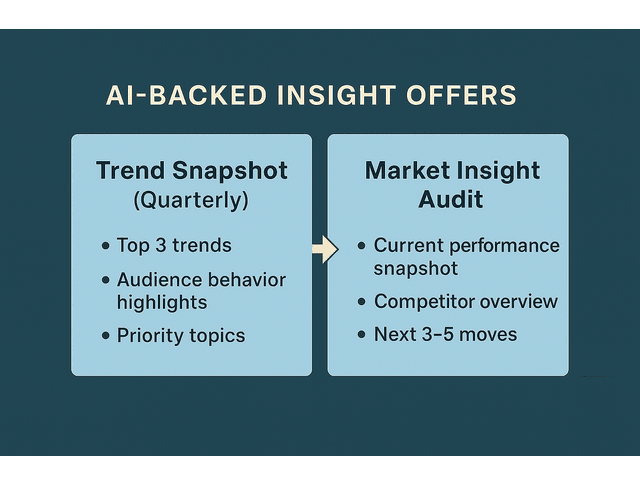
Behind the scenes, AI market analysis tools help you gather, filter, and summarize data efficiently. On the surface, the client receives clear, actionable guidance and a prioritized plan.
A straightforward audit outline might look like this:
- Section 1: Snapshot of current performance (top pages, weakest pages, key metrics).
- Section 2: Competitor and industry overview (topics they’re winning, content gaps).
- Section 3: Priority action list (3–5 moves for the next 30–90 days).
You can pitch it: “I’ll deliver a 3–5 page insight report each quarter that shows how your content is performing against the market and what we should publish next.” That’s a service clients can instantly understand and budget for.
In practice, even a simple audit like this can become the starting point for a quarterly content retainer, because it shows clients you’re thinking beyond individual posts and into the bigger picture of their marketing.
Final Thoughts
The key takeaway is simple: let AI handle the heavy scanning, sorting, and number-crunching so you can stay focused on high-level strategy and strong writing. When you pair your expertise with the leverage of AI market analysis tools, you stop selling isolated pieces of content and start selling insight, direction, and confidence.
Suppose you want to turn this into a repeatable system in your own freelance business. In that case, your next step might be designing a simple AI-assisted research and planning routine you use for every new client brief—or building a small “insight audit” offer you can add to your services page.
FAQs About AI Market Analysis Tools
AI market analysis tools are software platforms that leverage artificial intelligence to analyze customer, competitor, and industry data. They turn large volumes of information into practical insights you can apply to content planning, positioning, and marketing strategy.
These tools take over the slow, manual work—pulling data, spotting trends, and pulling everything together. Rather than digging through every report or social thread yourself, you can ask them to surface the main patterns, common questions, and new opportunities. Hence, your market research becomes sharper and much quicker to complete.
Yes. Many AI market research tools offer free tiers or entry-level plans that work well for solo professionals and small teams. You can start with core features—such as topic trends, keyword insights, and audience behavior summaries—and upgrade to advanced analytics only if your workload and revenue justify it.
Begin with one data source and one simple routine. Once a week, use an AI-connected analytics or SEO tool to review your client’s key pages and rising topics, ask for a summary of the main themes, and turn those into one or two content ideas for your next pitch or calendar update.
No tool can replace the judgment you bring to a project. You’re the one who understands tone, brand nuance, and what matters most to the client. Use these tools to speed up the research and number-crunching so you have more time to focus on strategy, stronger stories, and long-term client relationships.

Florence De Borja is a freelance writer, content strategist, and author with 14+ years of writing experience and a 15-year background in IT and software development. She creates clear, practical content on AI, SaaS, business, digital marketing, real estate, and wellness, with a focus on helping freelancers use AI to work calmer and scale smarter. On her blog, AI Freelancer, she shares systems, workflows, and AI-powered strategies for building a sustainable solo business.


Pingback: Data-Driven Content Marketing: Analyze Industry Data Smartly - The AI Freelancer