
Conference networking looks simple until you’re in it: a loud room, a packed schedule, and a growing pile of “We should stay in touch” conversations that never turn into anything. If you’re a founder or consultant, that’s not just awkward. It’s expensive. Conference networking tips only work when they’re tied to outcomes: qualified relationships, booked next steps, and content you can reuse.
Below is an operator-level system to meet industry leaders, protect your time, and leave with a pipeline, not a stack of business cards.
Everything I’ve shared here—and more—is in my book, available on Amazon. Click the link if you’re ready to take the next step.
Conference Networking Tips Before You Arrive: Plan for ROI
This is where ROI is decided.
Most conference disappointment starts before the event. You show up hoping to “meet the right people,” then you spend three days talking to whoever happens to be near the coffee.
Your fix is simple: decide who matters, why they matter, and what “success” looks like before you step into the venue.
Your Conference Networking Tips Target List: Who You Actually Need

Treat this like pipeline-building, not socializing.
Make three buckets:
- Buyers/Clients (people who could hire you, fund you, partner with your company, or bring you in)
- Partners/Collaborators (adjacent service providers, platform partners, agencies, integrators)
- Amplifiers (hosts, community leaders, editors, operators with distribution)
Then score each target quickly:
- Role relevance (0–2)
- Buying/collaboration window (0–1)
- Decision influence (0–1)
- Strategic upside (0–1)
Prioritize anyone scoring 4–5 and cap your list at 10 priority people per event.
This is how you avoid random networking and concentrate your limited energy where it can pay back.
Pre-Event Assets That Save Time (Not More Work)
Founders and authority builders don’t need more “prep.” They need fewer decisions on-site.
Bring three assets:
- One-line positioning
- “I help [who] achieve [result] without [pain].”
- Two openers + two bridge questions
- Opener: “What brought you here this year?”
- Bridge: “What’s the constraint that makes that hard right now?”
- A simple offer menu (one primary next step)
- Audit, consult, demo, or resource—pick one as your default.
Pick one default depending on your role:
- If you’re a founder, default to a 15-minute scope call.
- If you’re a consultant/coach, default to a resource + call (“I’ll send the framework, then we can discuss”).
- If you’re pursuing partners, default to a small co-action (intro swap, shared post, quick collaboration).
If you want a 15-minute prep checklist: choose targets, write your positioning line, and choose your one next-step offer. Done.
Book Meetings Without Being Pushy
Booking isn’t pushy when it’s specific and optional.
Use a short message like:
- “Saw you’re attending [event]. I work with [who] on [result]. If useful, happy to grab 20 minutes for a quick exchange.”
Your goal is not a long meeting. It’s a calendar hold (a quick scheduled next step).
Meet Industry Leaders With Conference Networking Tips in Real Time
This is where you qualify quickly.
Most people waste their best networking moments because they’re trying to sound impressive. Don’t. Your job on-site is to start clean, qualify fast, and secure a next step.
Think of each interaction as a mini-discovery call that ends with a small commitment.
Conference Networking Tips for First 60 Seconds: Earn Attention

The first minute decides whether the conversation becomes real or stays polite.
Use one of these:
- “What brought you here this year?”
- “Which session has been most useful so far?”
- “I saw your work on [topic]. How are teams actually handling it in the real world?”
Then use your 10-second focus line:
- “Lately I’m focused on helping [who] get [result] without [pain].”
Short. Calm. No pitch deck energy.
Ask Better Questions That Signal Authority
Authority comes from questions that reveal constraints, not from explaining what you do.
Use four question types:
- Trend: “What’s changing in your market right now?”
- Constraint: “What keeps this stuck?”
- Decision: “Who needs to say yes for this to move?”
- Implementation: “What have you already tried?”
Then apply a simple filter:
Continue if you hear urgency, ownership, and real constraints. Exit if the role is vague, the timeline is “someday,” or they can’t influence outcomes.
Exit Cleanly and Lock the Next Step
Most follow-up fails because the next step wasn’t agreed to while you had momentum.
Your goal is a micro-commitment:
- Intro swap
- Resource swap
- Calendar hold
Use a clean exit:
- “This is worth continuing. What’s best next—should we pick this up next week?”
On-site is for permission. After is for execution.
Conference Networking Tips for Founders Who Hate Wasting Time
This is where you protect attention.
If you’re content-strapped, scaling, or juggling delivery, networking can quietly drain you. Your system needs boundaries.
These rules keep you in the right rooms and out of the energy leaks.
Use Conference Networking Tips to Choose the Right Rooms

Operate in three zones:
- High-density networking space (where conversations start fast)
- Credibility space (talks, roundtables, Q&A)
- Deal-flow space (side events, sponsor areas)
If you try to do everything, you’ll do nothing well. Pick your zones each day.
A simple sample day plan that works for busy founders:
- Morning: credibility space (one session + Q&A to meet speakers/operators)
- Midday: high-density networking space (targets, coffee lines, hallways)
- Evening: deal-flow space (side event or sponsor gathering)
Your “No-Default” Rule for Random Chats
Random chats are fine—until they become your entire event.
Time-box first conversations to 5–7 minutes unless you see continuation signals.
If it’s not a fit, redirect politely:
- “I’m going to circulate, but I’m glad we connected.”
That sentence protects your time without burning bridges.
Capture Notes That Become Revenue Later

If you don’t capture notes, you will forget context—and your follow-up will sound generic.
Use a 30-second note format:
- Name | Context | Pain | Priority | Next step | Date
Keep it raw. Processing comes later.
After the Event: Conference Networking Tips That Convert
This is where value is captured.
Here’s the part most people skip: converting warm conversations into actual next steps.
Speed matters because attention decays fast. The MIT Lead Response Management study reported a major qualification advantage when contacting quickly, often cited as a ~21x difference between responding in 5 minutes vs. 30 minutes.
The 48-Hour Conference Networking Tips Follow-Up Sprint

Run a 48-hour sprint after the event. LinkedIn’s guidance on post-conference follow-up recommends reaching out within 24–48 hours with a personalized note that references your conversation.
Use the same three lanes from your target list, with copy/paste starters you can adapt:
- Buyer (scope a next step)
- “Great meeting at [event]. Based on what you shared about [pain], would you prefer (1) a 15-minute scope call or (2) I send a 3-point plan first?”
- Bump (Day 7): “Quick nudge—still worth a short scope call on [topic], or should I send the 3-point plan instead?”
- Close (Day 21): “Closing the loop for now. If you want to revisit [outcome], reply with ‘revisit’ and I’ll send times.”
- Partner (propose a small co-action)
- “Loved your angle on [topic]. Want to do a small co-action first—intro swap, a short shared post, or a quick resource exchange?”
- Bump (Day 7): “If co-action is too soon, happy to start with an intro swap. One each?”
- Close (Day 21): “All good if now isn’t the time. I’ll stay in your orbit—if a co-action makes sense later, I’m in.”
- Amplifier (offer something shareable)
- “Your point on [idea] stuck with me. I wrote a short recap—want me to send it? If it’s useful, I can credit/tag your work.”
- Bump (Day 7): “Still happy to share that recap whenever you want it—no rush.”
- Close (Day 21): “I’ll stop nudging. If you ever want a clean quote/summary from [event], I can send one.”
Turn Conference Conversations Into Authority Content
Once the follow-up is running, convert the same conversations into content.
If you’re an authority builder, the event isn’t just lead gen. It’s content fuel.
Turn one conference into weeks of content with three angles:
- Insight: “Three patterns I heard repeatedly…”
- Prediction: “What operators are preparing for next…”
- Teardown: “Where teams are stuck and what’s working…”
A simple repurposing path:
- LinkedIn post (pattern recap) → email to your list (one takeaway + a question) → short blog or newsletter issue (expanded insight + example)
A non-name-dropping rule that keeps you credible:
- Don’t write “At [event], [famous person] said…”
- Write “A repeated operator pattern I heard this week was…” and focus on the lesson.
This matters because relationship-driven growth compounds when trust travels. Nielsen has reported that 88% of global respondents trust recommendations from people they know more than any other channel.
Build a Simple Pipeline From Your Event List
Your follow-up needs a home.
Use a spreadsheet or CRM with:
- Name
- Category (buyer/partner/amplifier)
- Last touch
- Next step
- Date
After the 48-hour sprint, run a light cadence:
- Day 7
- Day 21
If there’s no reply after your final touch, close the loop and archive. A quiet pipeline beats a guilt pile.
Final Thoughts
Conference networking tips don’t work when they’re motivational. They work when they’re operational: a short target list, strong questions, micro-commitments, and a 48-hour follow-up sprint that turns conversations into calls, collaborations, and content.
If you want more plug-and-play systems like this—writing workflows, AI-supported content production, and calm execution frameworks—check my Amazon Author page.
Frequently Asked Questions About Conference Networking Tips
Go in with a short target list, open with context-based questions, qualify quickly, and secure a micro-commitment before you exit.
Use a simple opener (“What brought you here?”) and one clear focus line about what you help with, then move into constraint-based questions.
Follow up within 24–48 hours, reference a specific detail, and propose one small next step (call, resource, or intro).
Reference something specific they said or did, ask an implementation question, and keep the ask small (permission to follow up or a quick calendar hold).
Use structure: plan targets, arrive with prepared openers, time-box conversations, and prioritize a few high-quality interactions over volume.
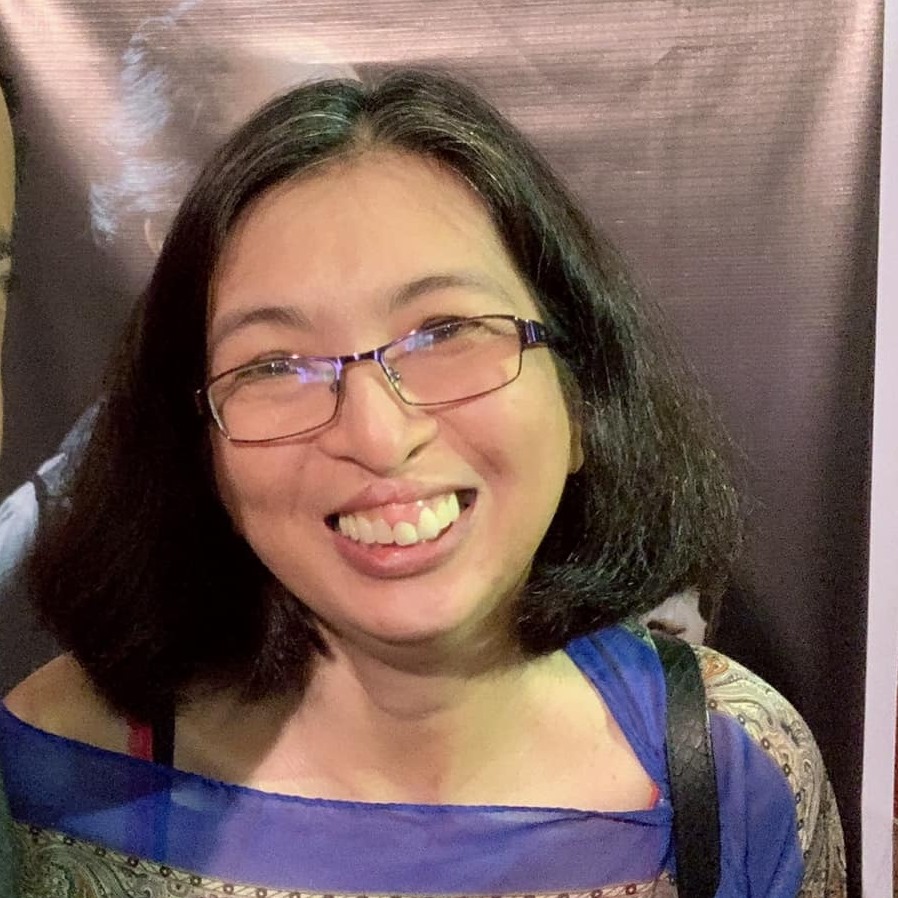
Florence De Borja is a freelance writer, content strategist, and author with 14+ years of writing experience and a 15-year background in IT and software development. She creates clear, practical content on AI, SaaS, business, digital marketing, real estate, and wellness, with a focus on helping freelancers use AI to work calmer and scale smarter. On her blog, AI Freelancer, she shares systems, workflows, and AI-powered strategies for building a sustainable solo business.