

You have strong ideas, yet your sentences keep tripping up readers. They pause, rewind, and bail. If you simplify complex sentences, your message lands faster and sticks longer. Let’s turn tangled lines into clean, confident prose that moves.
Everything I’ve shared here—and more—is in my book, available on Amazon. Click the link if you’re ready to take the next step.
Simplify Complex Sentences to Improve Writing Clarity
Long sentences can sound impressive, yet they often bury your message under layers of words. Cut when needed and keep complexity only when it truly adds to the meaning. That’s the first step to writing with clarity.
Why Complex Sentences Can Weaken Your Message
When you write for clients or audiences who want fast, clear answers, long and winding sentences can slow them down. You might be trying to sound polished or professional. Still, a sentence that’s overloaded with clauses, filler phrases, and stacked ideas makes readers work harder than they should. In most cases, this extra effort causes them to lose focus, or worse, stop reading altogether.
Research on sentence length backs this up. An analysis summarized by the American Press Institute found that when the average sentence length is 14 words, readers understand more than 90% of the content—but when sentences stretch to 43 words, comprehension drops to below 10%. Shorter, cleaner sentences don’t just “look nicer”; they dramatically improve how much your reader actually understands.
Complexity in writing isn’t always bad. For technical writing or academic work, you sometimes need to layer ideas. The challenge is knowing when complexity helps your point and when it muddies the message. As a freelance writer, your job is to keep the reader engaged, and trimming the excess can make your work much easier to follow.
How to Simplify Complex Sentences Without Losing Meaning
Start by identifying the core idea in each sentence. If you can’t explain it in one breath, you may be packing in too much. Break the sentence into two or more shorter ones, each focused on a single thought. Replace long filler phrases like “due to the fact that” with simpler words like “because.”
If your sentence includes more than two commas, you may be juggling too many points at once. Trim unnecessary clauses, and use direct connectors to move smoothly between ideas. This keeps your meaning intact while letting the text flow at a more natural pace.
Spotting Clarity Issues in Your Drafts with AI Tools
AI-powered grammar and style checkers can scan your text in seconds, flagging overly long sentences or awkward structures. Tools like Grammarly, ProWritingAid, or Hemingway Editor highlight where complexity might be slowing the reader’s pace.
When you run a draft through one of these tools, you may notice trends like lengthy openings or layered subordinate clauses. Focus on the spots where you can smooth the flow without stripping the content of its detail.
Simplify Complex Sentences for Stronger Client Work
Clear sentences build trust with clients and their audiences. A structure that matches the reader’s needs makes your writing easier to follow and more persuasive.
Matching Sentence Complexity to the Target Audience
Your client’s audience should determine the level of complexity in your writing. For a broad consumer audience, aim for shorter sentences and familiar vocabulary. For an industry-specific readership, you can afford more detail and specialized terms, while still keeping sentence structure manageable.
Readability research supports this focus on the audience. The Center for Plain Language notes that the average American has a readability level equivalent to a 7th–8th grader, which is why public-facing communication, especially in healthcare and government, is often written at that level. Simplifying sentences isn’t “dumbing it down”—it’s meeting most readers where they are.
Ask your client about their reader demographics. The more you know about your audience’s background and expectations, the better you can adjust sentence length and complexity to fit their needs.
Simplify Complex Sentences Without Making the Writing Sound Basic
Shorter sentences can still carry depth and authority. Choose precise words and connect ideas in a way that flows naturally.
Instead of “The implementation of the new marketing strategy will result in an improvement in lead generation metrics,” you can write, “The new marketing strategy will increase leads.” It delivers the same meaning in a form that’s quicker to absorb.
Using AI to Test and Refine Sentence Structure
Certain AI tools let you try out multiple versions of a sentence and compare their readability scores. This is useful for seeing whether your edits improve clarity or oversimplify the text.
Experiment with several rewrites of a single complex sentence, then use the tool’s feedback to choose the strongest option. Over time, you’ll collect sentence structures that balance clarity with tone while keeping your style flexible.
Simplify Complex Sentences in the Editing Stage
Editing is where good writing becomes great. Use this stage to identify sentence-level habits that slow readers down and replace them with clearer, sharper lines.
Common Patterns That Make Sentences Hard to Read
Certain habits make writing harder to follow. Watch for these:
- Dependent clauses that multiply in one sentence
- Long strings of prepositional phrases
- Passive voice that hides the subject
- Modifiers that weaken meaning without adding real detail
While editing, check for these patterns and decide whether each one earns its place. If not, simplify the structure to keep the pace moving.
Quick Fixes That Instantly Improve Flow
You can make quick improvements by swapping out long phrases for shorter alternatives. For example:
- “In order to” → “To”
- “Due to the fact that” → “Because”
- “At this point in time” → “Now”
- “For the purpose of” → “For”
- “With regard to” → “About”
Mix short fixes like these with occasional rewording to avoid too much repetition in your edits.
Breaking One Long Sentence Into Two or More
Splitting an overloaded sentence is one of the fastest ways to improve clarity. Instead of trying to cover multiple ideas in one breath, give each idea its own sentence.
For instance, “The company, which has been operating for over a decade and recently launched a new product line, is expecting significant growth this year” could become: “The company has been operating for over a decade. It recently launched a new product line and expects significant growth this year.”
Research in writing and education also suggests that shorter sentences support accessibility and inclusion. A 2023 article in Perspectives on Medical Education argues that concise sentence structures improve readability and make information more accessible to readers with lower literacy or higher cognitive load, without sacrificing accuracy.
Simplify Complex Sentences to Build a Long-Term Writing Habit
Strong writing habits take time to form. Build AI writing workflows that make sentence clarity a recurring focus until it becomes instinct.
Creating a Personal Checklist for Sentence Clarity
A simple editing checklist can help you stay consistent. Include reminders such as:
- Keep the average sentence length under 20 words
- Limit subordinate clauses to one per sentence
- Favor a subject-verb-object structure in most cases
- Break up dense paragraphs so the page is easier to scan
Keeping this checklist nearby while editing helps you focus on clarity.
Simplify Complex Sentences with Consistent Practice
Clarity improves with regular practice. Work on spotting and fixing overly complex structures until concise writing feels automatic.
Revisit old drafts from time to time. You may find new ways to tighten the text that you missed the first time.
Combining Sentence Clarity with Other Editing Goals
Simplifying your sentences works best when you pair it with other editing priorities, such as tone, grammar, and formatting. This makes your writing easy to read and gives it a professional finish.
While simplifying, you might notice other opportunities to strengthen the draft, such as replacing weaker verbs with stronger ones or adding variety to sentence rhythm. These layered edits make your work livelier and more engaging.
Final Thoughts
Clarity is one of the most valuable skills a freelance writer can develop. When your sentences are easy to follow, your ideas shine through, and your clients see you as a professional who respects their audience’s time.
AI tools can point out and help correct overly complex sentences, but it’s your judgment that keeps the writing aligned with the message. With practice, you’ll know when to streamline a sentence and when to keep its complexity for emphasis.
Want your writing to be more powerful and reader-friendly? In your next draft, find three sentences to simplify. Use an AI tool to compare the readability before and after, then note which changes make the text feel smoother. Repeat this process often, and you’ll build a reputation for work that’s clear, confident, and engaging from start to finish.
Frequently Asked Questions About Simplifying Complex Sentences
Start by finding the main idea, then cut extra clauses, break long sentences into two or more, swap filler phrases (“in order to”) for shorter ones (“to”), and use active voice where possible.
Simpler sentences improve clarity, boost comprehension, and reduce reader fatigue. When readers don’t have to fight through dense lines, they’re more likely to stay engaged and finish your piece.
Watch for multiple clauses, more than two commas, or phrases that feel hard to say in one breath. If you have to reread a sentence to understand it, your audience probably will too.
Apps like Grammarly, ProWritingAid, and Hemingway Editor highlight long or hard-to-read sentences so you can shorten, split, or rephrase them. Many AI text simplifiers also suggest clearer alternatives while keeping your meaning.
Keep your natural tone and word choice, but deliver ideas in shorter, more focused sentences. Use precise verbs, trim only what’s unnecessary, and rewrite cluttered lines instead of stripping out all personality.
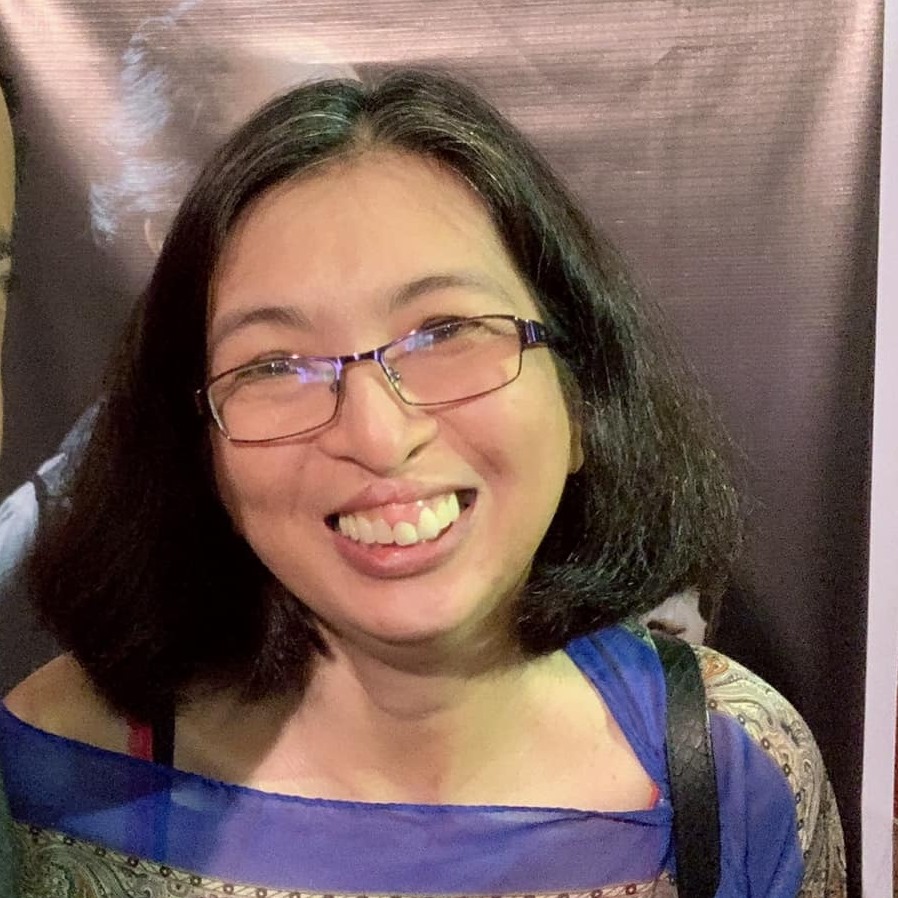
Florence De Borja is a freelance writer, content strategist, and author with 14+ years of writing experience and a 15-year background in IT and software development. She creates clear, practical content on AI, SaaS, business, digital marketing, real estate, and wellness, with a focus on helping freelancers use AI to work calmer and scale smarter. On her blog, AI Freelancer, she shares systems, workflows, and AI-powered strategies for building a sustainable solo business.


Pingback: How to Shorten Paragraphs for Clearer Writing - The AI Freelancer