You can be competent, experienced, and fast, yet still lose hours to one invisible problem: your writing doesn’t travel well. In AI-adjacent work, a rushed note becomes a misunderstood requirement, and a “quick doc” turns into a Slack thread that won’t die. That’s why a technical writing workshop still matters even if you’re not trying to become a technical writer. It teaches simple, repeatable moves that make complex work clear, scannable, and easy to act on, especially when AI tools are in the mix.
One reason this matters: people don’t read carefully. Nielsen Norman Group found that on an average web page, users have time to read at most 28% of the words during an average visit, and 20% is more likely.
Everything I’ve shared here—and more—is in my book, available on Amazon. Click the link if you’re ready to take the next step.
Why a Technical Writing Workshop Still Matters in AI Work
If your week is filled with “small clarifications,” you’re not dealing with communication issues. You’re dealing with documentation debt.
Skills That Go Beyond Grammar
A workshop isn’t about sounding polished. It’s about writing that other people can use without you present. Most of your time loss shows up in a small set of repeat documents, and when they’re unclear, the same questions come back week after week.
In AI-related work, the artifacts that break under pressure are predictable:
- Product Requirements Documents (PRDs) and technical specs
- Model cards and evaluation summaries
- API docs, quickstart guides, and SOPs
When writing is weak, the failures are also predictable: rework cycles, stalled execution, unclear ownership, and decisions made on partial understanding.
Here’s what that looks like in real life. A PRD says the model should “improve response quality,” but it never defines what “quality” means, how it will be measured, or what tradeoffs are acceptable. The team ships changes anyway, then spends the next week debating whether the results are better or just different. You don’t have a model problem at that point. You have a documentation problem: the decision criteria were never written down in a way that other people could use.
Why Clarity Beats Speed in AI-Driven Work
Speed helps once. Clarity helps repeatedly.
Interruptions make unclear writing expensive fast. UC Berkeley HR’s summary of UC Irvine research reports:
- average time on a task before interruption: 12 minutes 40 seconds
- average time before returning to the same task: 25 minutes 26 seconds
Clear documentation reduces the number of times you have to “return to the same task” just to restate what you already decided.
How Writing Affects Trust, Handoffs, and Decisions
Good documentation is a trust signal. It tells people what’s true, what’s decided, what’s assumed, and what happens next. When documentation lacks structure or scope control, decisions stall—not because people are lazy, but because they can’t safely move forward.
What You Actually Learn in a Technical Writing Workshop
The best workshops don’t give you “better writing.” They give you repeatable patterns that remove decision fatigue.
Core Documentation Patterns Used Across Tech Teams
Workshops teach patterns that show up everywhere because they match how people consume information:
- task-based documentation (what to do, when, how, what to expect)
- problem–solution framing (what’s broken, what fixes it, what changes)
- scannable hierarchy and chunking (so skimmers still get the truth)
A helpful benchmark is Google’s technical writing resources, which focus on planning, authoring, and clarity in technical documentation.
Methods for Organizing Complexity
This is the part most people think they already do—until they try to document something under pressure.
Common workshop moves include defining the audience and setting scope boundaries, organizing information using progressive disclosure (what’s needed now vs later), controlling terminology and maintaining style consistency, and turning SME input into usable documentation without copying jargon verbatim.
To make that practical, you’re really learning a small skill set you can reuse across any document. You learn to define the reader and the decision or task they need to complete; set a hard scope boundary so the document doesn’t turn into a dumping ground; build an information hierarchy that makes the “now” obvious and the “later” easy to find; write steps or criteria that someone else can actually follow without guessing; add examples and edge cases so the reader doesn’t improvise under pressure; control terminology so the same concept isn’t described three different ways; and revise for clarity by removing implied context that only exists in your head.
Writing for Humans, Systems, and Future Readers
You’re not only writing for today’s teammate. You’re writing for future collaborators, future you, and search, knowledge bases, and AI assistants that retrieve and reuse documentation. Writing that survives version changes is writing that is explicit about context and constraints.
How AI Changes the Technical Writing Workshop Model
AI can draft faster than you can. The real risk is that it can also draft confidently wrong, and wrong documentation scales damage.
Using AI to Support Clear Thinking
AI is useful for outlining and structural drafts, summarizing technical discussions, and transforming notes into documentation. But judgment and context stay human responsibilities—across product, ops, research, and delivery.
Where AI Fits Inside a Reliable Documentation Workflow
A reliable AI-assisted workflow is simple:
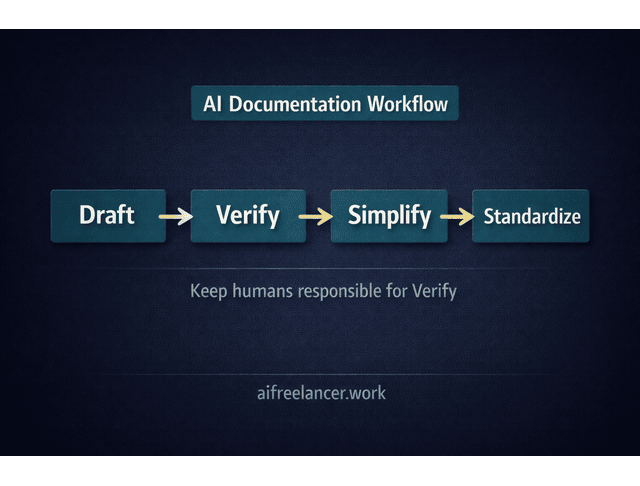
Use AI heavily in Draft and Standardize. Keep humans responsible for verifying.
Avoiding Brittle Documentation
This workflow matters because AI failures in documentation are predictable, and they tend to repeat until you install a review habit.
Common failure modes:
- hallucinated technical claims → decisions based on incorrect info
- terminology drift → inconsistent interpretation across teams
- undocumented assumptions → fragile implementations
Prevention checklist:
- Source-first writing
- Confirm against live systems
- One pre-publish review pass
Applying These Principles Without Taking a Technical Writing Workshop
You don’t need a writing conference to get workshop outcomes. You need a loop you can run when you’re busy.
Turning Technical Writing Workshop Lessons Into Repeatable Writing Systems
A simple application loop:
- Choose the artifact type (spec, runbook, FAQ)
- Apply a fixed template
- Run a quality checklist
- Version and reuse
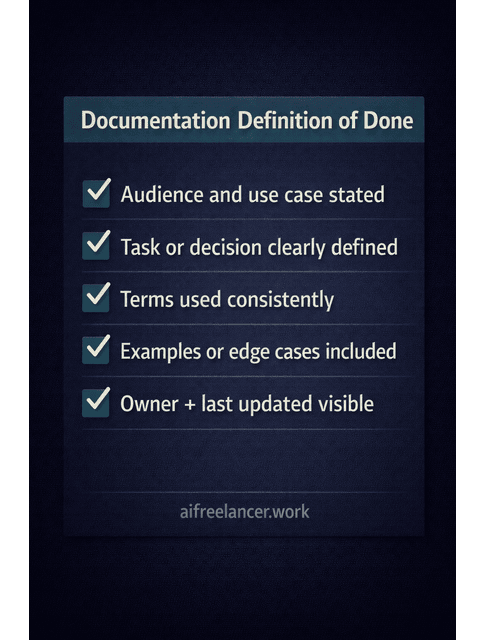
Definition of done (checklist):
- Audience and use case stated
- Task or decision is clearly defined
- Terms used consistently
- Examples or edge cases included
- Owner and last-updated date visible
If you want a fixed template you can actually reuse, start with a runbook. A runbook forces clarity because it’s built for moments when nobody has time to “think through it from scratch.” Use this as a starting point, keep it short, and make sure one person owns updates.
Runbook template
- Purpose: what this runbook is for, and what it is not for
- When to use: triggers, symptoms, or thresholds that mean “use this now.”
- Preconditions: access, tools, permissions, and required context
- Decision path: if/then choices that prevent improvisation
- Step-by-step actions: numbered steps with expected outcomes after each step
- Verification: how you confirm the fix worked (metrics, logs, tests)
- Rollback: what to do if the fix fails or makes things worse
- Escalation: who to contact, when, and what to include
- Owner + last updated: so it stays maintained instead of abandoned

Documentation also reduces time lost searching. McKinsey notes that knowledge workers spend roughly 20% of their day searching for and gathering information, and that searchable stores can help repurpose 30–35% of that search time.
Building Calm, Predictable Documentation Habits
The loop fails without a routine that keeps it running.
Separate drafting and editing phases so you don’t rewrite while you’re still thinking. Timebox documentation work into short blocks so it stays consistent instead of becoming a weekend project. Batch similar updates together—like three runbooks or three SOP sections—so you reuse the same mental setup.
Writing Once, Reusing Everywhere With Structure
Design modular documentation blocks you can reuse across internal docs, onboarding materials, and client-facing content. A simple reusable block includes what the document is, when to use it, the key steps or decisions, common pitfalls, and related links.
Final Thoughts
A technical writing workshop works because it teaches structure you can reuse when you’re under pressure: clear artifacts, consistent terminology, scannable formatting, and a definition of done. When you pair those habits with AI, you get speed without sacrificing accuracy—and your writing creates less follow-up work.
If you want more workflow-first systems you can apply immediately, check my books on my Amazon Author Page.
Frequently Asked Questions About the Technical Writing Workshop
You learn how to turn complex work into documents that other people can use without you present. That usually includes scannable structure, task-based writing, consistent terminology, and examples that prevent guesswork.
It’s for anyone whose work depends on clear handoffs—writers, operators, product teams, consultants, and anyone documenting processes, decisions, or systems.
Pick one document type you repeat (like a runbook or SOP), apply a fixed template, and run a short checklist before you share it. Keep the loop small so you can repeat it weekly.
AI helps you draft and standardize faster, but it also increases the risk of confident errors. The safest approach is to draft with AI, then confirm claims against live systems, simplify for humans, and standardize for reuse.
It states purpose and scope, uses consistent terms, makes decisions and steps explicit, includes examples or edge cases, and stays maintained with an owner and a last-updated marker.
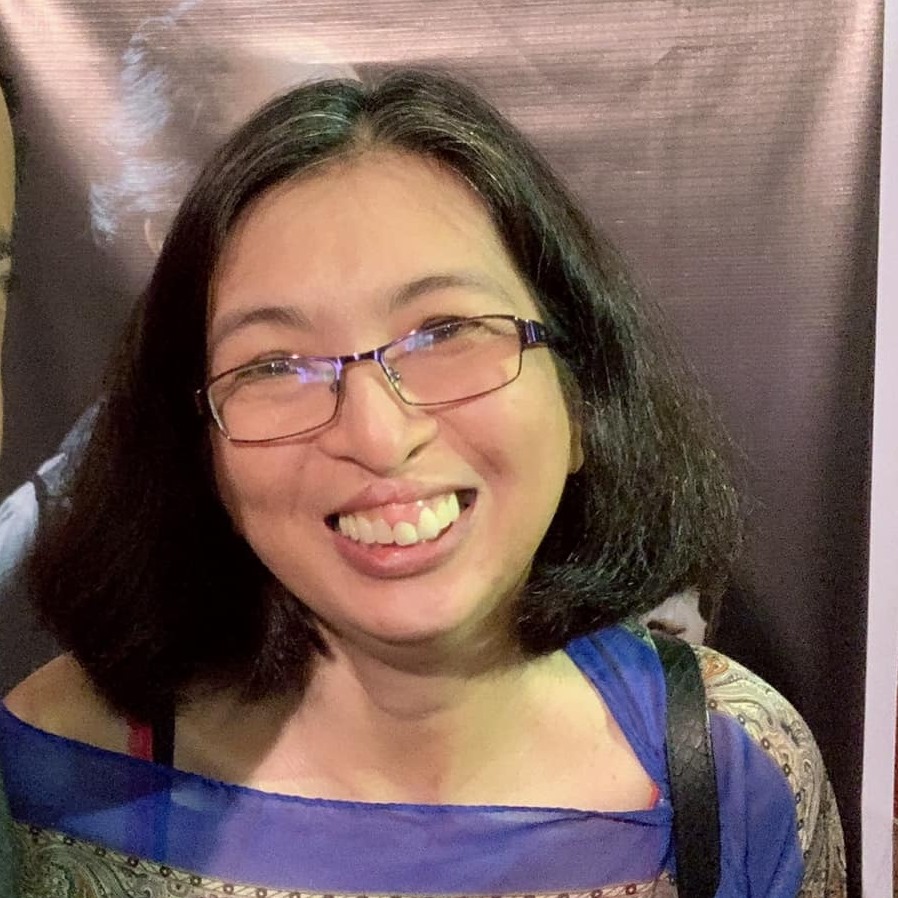
Florence De Borja is a freelance writer, content strategist, and author with 14+ years of writing experience and a 15-year background in IT and software development. She creates clear, practical content on AI, SaaS, business, digital marketing, real estate, and wellness, with a focus on helping freelancers use AI to work calmer and scale smarter. On her blog, AI Freelancer, she shares systems, workflows, and AI-powered strategies for building a sustainable solo business.