
Maintaining impeccable grammar and a consistent writing style is paramount in freelance writing. Writing with AI means using AI tools to support your process, such as tightening grammar, improving clarity, and keeping tone consistent, while you stay in control of the final draft. AI writing tools have revolutionized how writers enhance their work, offering real-time feedback and advanced suggestions. This blog explores how to use AI to refine your writing, specifically by improving grammar and style suggestions, which can significantly boost your productivity and the quality of your work.
Everything I’ve shared here, and more, is in my book, available on Amazon. Click the link if you’re ready to level up.
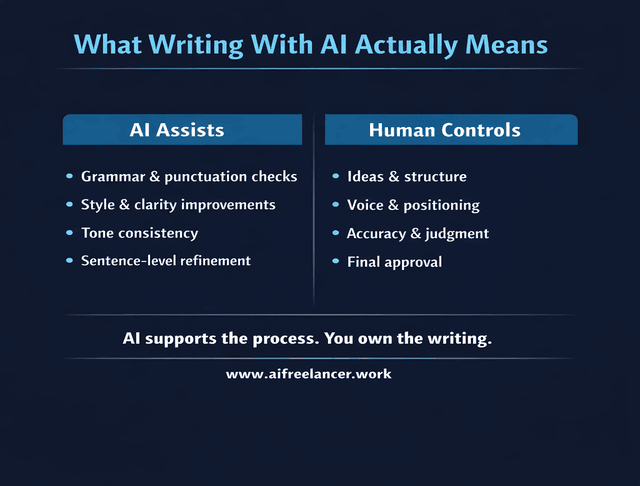
The Role of AI in Writing
AI has profoundly impacted the writing industry. Initially used for basic text correction, AI tools offer sophisticated features beyond mere spelling checks. These tools benefit freelance writers by saving time and enhancing the quality of their output. Recent data from Adobe’s Creators’ Toolkit Report shows that 86% of global creators now use generative AI in their workflows, and 81% say it helps them create content they couldn’t have produced otherwise, underscoring how deeply AI is woven into modern creative work.
Evolution of AI in the Writing Industry
AI writing tools have evolved significantly from their early iterations, which were limited to basic grammar checks. Modern tools leverage machine learning to understand context and provide more nuanced suggestions.
For instance, Grammarly and LanguageTool use sophisticated AI algorithms to detect and correct advanced grammatical errors, making the text more precise and engaging. These tools identify mistakes and offer stylistic improvements tailored to the writer’s tone and audience. The integration of machine learning enables these tools to learn from vast datasets, improving their accuracy and effectiveness over time and greatly benefiting freelance writers.
Benefits of Using AI for Freelance Writers
Freelance writers gain several advantages from AI tools, including:
- Efficiency: AI tools provide real-time corrections, enabling writers to focus more on creating content and less on editing and proofreading. This immediate feedback streamlines the writing process and enhances productivity. In one MIT study on professional writing tasks, workers using ChatGPT completed their assignments about 40% faster and produced work that external reviewers rated 18% higher in quality than those without access to the tool.
- Consistency: AI tools help freelancers meet client expectations and ensure uniformity across content by maintaining a consistent style. This is particularly beneficial when working with long-term clients or on large projects.
- Enhanced Quality: Advanced grammar and style suggestions improve readability and engagement, making the content more appealing to readers. These tools can identify and correct complex grammatical issues, awkward phrasing, and stylistic inconsistencies, enhancing the overall quality of the writing.
Overview of Popular AI Writing Tools
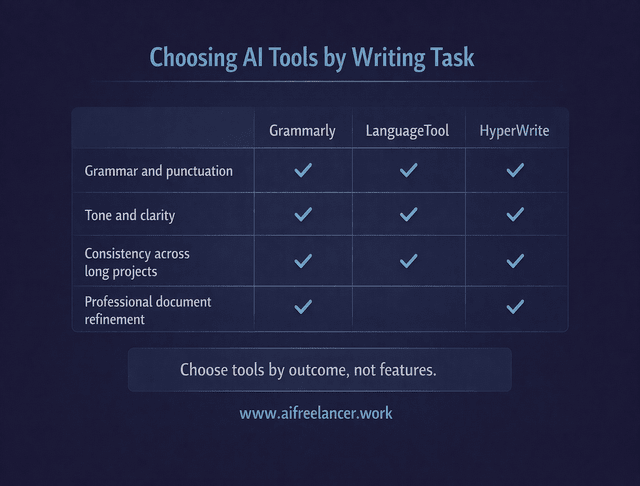
Several AI tools stand out for their capabilities:
- Grammarly: Offers comprehensive grammar and style suggestions. It integrates with multiple platforms, providing real-time feedback on your writing. Grammarly receives high ratings for its ability to enhance text by identifying typos, grammatical errors, and punctuation issues, and for suggesting mood and tone adjustments to ensure clear communication.
- LanguageTool: Provides multilingual support and AI-based corrections for complex grammatical issues. This tool uses rule-based and AI-based analyses to ensure thorough error detection and style improvements, making it suitable for writers who need advanced language and tone adjustments.
- HyperWrite: Offers detailed feedback on writing quality and style, making it ideal for refining professional documents. It evaluates the overall quality of your writing. It provides suggestions for grammar, punctuation, and style, helping you enhance clarity, correctness, and engagement in your work.
Writing with AI: How It Works
Understanding how AI algorithms function can help you utilize these tools more effectively.
Understanding AI Algorithms
AI writing tools use advanced machine learning algorithms to process and analyze large amounts of text data. These algorithms identify patterns and rules, effectively pinpointing and correcting grammar and style issues.
For instance, Grammarly’s AI is designed to correct basic grammar mistakes and suggest tone adjustments to match the context and audience, providing a more nuanced edit than a human might. This advanced capability allows Grammarly to catch subtle errors, such as incorrect verb tenses or misplaced modifiers, that even the most experienced human editors can often overlook.
Integration with Writing Platforms
AI writing tools seamlessly integrate with platforms such as Google Docs, Microsoft Word, and web browsers, providing real-time feedback without disrupting your workflow. This integration means working across different platforms and receiving instant suggestions and corrections.
For instance, Grammarly’s browser extension offers suggestions for grammar and style. At the same time, you write emails, social media posts, or any online content. This ensures that no matter where you are writing, the AI tool enhances your writing quality by providing real-time corrections and recommendations, maintaining consistency, and improving overall writing efficiency.
Real-time Grammar and Style Suggestions
AI tools offer a significant benefit: real-time feedback. LanguageTool and HyperWrite deliver instant corrections, ensuring you consistently maintain high writing standards. This immediate feedback is essential for freelance writers facing tight deadlines. These tools ensure your work is polished and professional before submission by highlighting errors and suggesting improvements as you write.
Additionally, the quick turnaround time of these corrections enables you to efficiently manage multiple projects, reducing time spent on editing and allowing more focus on content creation.
Writing with AI: Key Features
AI tools offer a range of features that improve writing quality.
Grammar and Style Suggestions
AI writing tools excel at providing detailed grammar and style suggestions by not only highlighting errors but also offering explanations to help you understand and learn from your mistakes.
For instance, Grammarly goes beyond correcting basic grammatical errors; it suggests stylistic changes that enhance clarity and engagement in your writing. These tools clarify complex grammar rules and improve your writing skills by explaining the reasons behind each recommended change. This educational approach ensures you correct mistakes and become a better writer over time, making these tools invaluable for continuous improvement.
Customization Options
Many AI tools allow you to customize their suggestions to match your writing style. By setting preferences for tone, formality, and specific terminology, you can tailor the feedback to reflect your unique voice. This level of customization is precious for freelance writers who work with diverse clients, each with distinct stylistic requirements.
For instance, if you prefer a more formal tone for business writing or a casual tone for blog posts, AI tools like Grammarly or LanguageTool can adjust their suggestions accordingly. This ensures that the AI’s feedback is accurate and contextually appropriate, enhancing both the quality and authenticity of your writing.
Language and Tone Adjustments
AI tools help maintain a consistent tone throughout your writing. Whether you need a formal tone for business documents or a casual tone for blog posts, AI tools like HyperWrite offer tailored suggestions to adjust your language accordingly. These tools analyze the context and audience of your writing, providing real-time feedback to ensure that your tone aligns with your intended message.
For instance, AI might suggest more professional vocabulary and a more structured approach in a business document. At the same time, a blog post could recommend a more conversational style. This ability to seamlessly switch tones helps freelance writers meet diverse client needs and maintain a coherent voice across various types of content.
Maximizing the Potential of AI Writing Tools
Choosing the right one and using it effectively are essential to fully benefit from AI writing tools.
Choosing the Right AI Tool
When selecting an AI writing tool or exploring AI writing platforms, consider its features, ease of use, and integration capabilities. Grammarly, LanguageTool, and HyperWrite each offer unique strengths suited to various needs. Grammarly stands out with its thorough grammar and style suggestions and seamless integration across multiple platforms.
LanguageTool offers advanced corrections for complex grammar issues and supports multiple languages. HyperWrite gives detailed feedback on writing quality and style, making it suitable for professional document refinement. Evaluate these tools against your needs to determine the best fit for your workflow.
Best Practices for Writing with AI
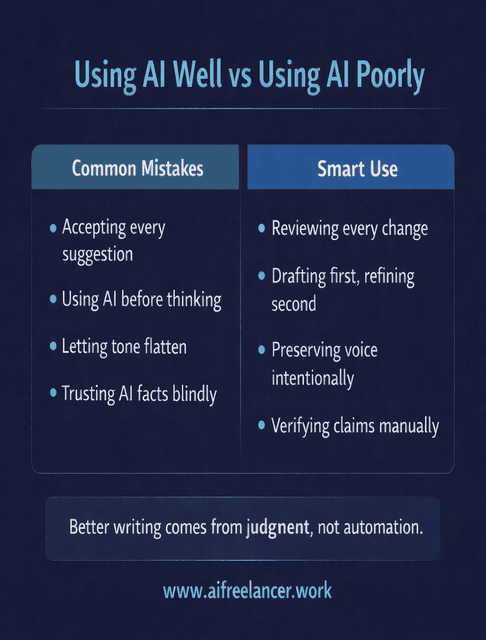
- Incorporate AI Suggestions: Use AI feedback to enhance your writing, focusing on grammar and style improvements. Constantly review and manually approve changes to ensure they match your intended message and maintain high quality.
- Stay Updated: Regularly update your AI tools to access the latest features and improvements. Keeping the software current ensures you benefit from the most advanced capabilities, including more accurate suggestions and enhanced integration options.
- Balance AI and Human Input: While AI offers valuable insights and automated corrections, human judgment is essential. Review AI suggestions critically to maintain authenticity, context-appropriateness, and personal touch in your writing.
How Freelance Writers Actually Use AI
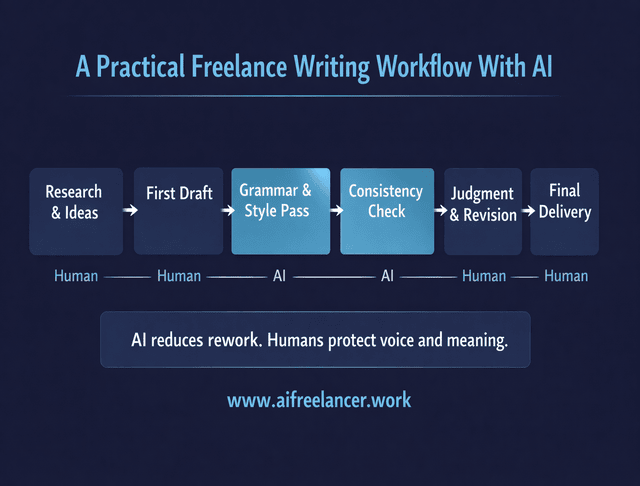
Most advice about writing with AI stays vague. In freelance work, the value comes from using AI in specific spots where it reduces rework and protects consistency.
Here are practical ways to use AI without handing over control of your writing.
- Use AI after you draft, not before you think. Write your messy first pass, then use AI to clean grammar, tighten wording, and spot unclear sentences. This keeps your ideas and structure yours.
- Treat AI like a second set of eyes for consistency. If you write long content, client retainers, or multi-part guides, run each section through the same settings and checks so your tone and terminology stay uniform.
- Use AI to reduce revision loops. Before sending a draft, ask your tool to flag: tone shifts, overly long sentences, repeated phrases, and unclear transitions. These are common reasons clients request edits.
- Keep “voice critical” parts human-led. Headlines, hooks, positioning, and persuasion usually need human judgment. Use AI to refine the language, not decide the message.
- Know when not to use AI. Avoid pasting sensitive client data into tools that you have not vetted. Also, avoid accepting factual claims blindly. AI can polish a wrong sentence.
Case Studies
Many freelance writers have successfully used AI tools to improve their writing. For example, a freelance writer utilizing Grammarly noticed a significant enhancement in their work quality. The tool’s real-time grammar and style suggestions helped them minimize grammatical errors and awkward phrasing, resulting in more polished, professional content.
As a result, this writer noticed improved client satisfaction due to the consistent quality and clarity of their writing. The ease of integrating Grammarly into various platforms like Google Docs and Microsoft Word further streamlined their workflow, making it an invaluable asset in their freelance writing toolkit. This experience mirrors broader trends in the freelance economy: research from the Upwork Research Institute shows that 88% of freelancers say AI has had a positive impact on their careers, particularly by helping them work more efficiently, specialize, and deliver higher-quality results for clients.
Writing with AI: Future Trends
AI will increasingly impact writing as technological improvements continue and its use among writers grows.
Advances in AI Writing Technology
AI writing tools will soon offer more personalized suggestions tailored to individual writing styles and preferences, creating a more customized user experience. These tools will improve writers’ understanding of context, enabling them to offer more precise and pertinent suggestions by better comprehending the subtleties of various writing situations.
Additionally, improved integration with other writing platforms will streamline freelance writers’ workflows, making it easier to incorporate AI feedback directly into their preferred writing environments. These advancements will further solidify AI tools’ role as indispensable assets for freelance writers, enhancing their efficiency and output quality.
Ethical Considerations
As AI tools become more prevalent, addressing ethical concerns is essential. Data privacy is a significant issue; AI tools often require access to sensitive information, raising concerns about how this data is used and protected.
Additionally, the potential for AI-generated content to dilute originality is a concern, as reliance on AI for writing can lead to homogenization and loss of unique voice. Ensuring transparency in AI algorithms and maintaining strict ethical standards in AI use is critical. This includes clear policies on data handling and measures to ensure AI supports rather than replaces human creativity.
The Growing Importance of AI Literacy
Freelance writers should actively keep up with the latest advancements in AI writing technology to fully utilize these tools. Staying informed ensures they can harness the full potential of AI features and improvements.
Resources such as online courses and webinars are invaluable for enhancing AI literacy. These educational platforms provide insights into the functionalities and best practices of AI tools, enabling writers to use them to their full potential. Staying updated improves writing quality and gives writers a competitive edge in the industry, allowing them to meet evolving client demands and maintain high standards in their work.
Final Thoughts
Writing with AI offers numerous benefits, from enhanced grammar and style suggestions to increased efficiency and consistency. By integrating AI tools into your workflow, you can elevate your writing quality and meet the demands of today’s competitive freelance market. Embrace the future of writing with AI and unlock new levels of productivity and excellence.
Ready to turn AI from a nice-to-have into a real advantage? Visit my Amazon Author page for step-by-step guides built for freelancers who care about quality, speed, and control. These books show you exactly how to write faster, edit cleaner, and deliver with confidence without sacrificing your voice. Click through and start getting better results from AI today.
Frequently Asked Questions About Writing With AI
It usually means using AI tools to support your writing, checking grammar, improving style, generating ideas, or polishing drafts, while you stay in control of the final content.
Yes, as long as you treat AI as an assistant, not the author. Use it to fix grammar, improve clarity, and speed up edits, then review everything to keep your voice and intent.
In professional writing, it is a tool choice. What matters is originality, accuracy, and whether you meet client requirements. If a client has rules about AI use, follow them. If they do not, use AI responsibly and keep your standards high.
Sometimes they can tell when writing sounds generic or overly polished in a uniform way. That is why human review matters. Keep your voice, vary your rhythm, and make sure every claim is accurate and intentional.
You can run your drafts through AI tools to fix grammar and punctuation, smooth awkward sentences, adjust tone and formality, and keep long projects consistent from start to finish. Use AI for suggestions, then decide what stays.
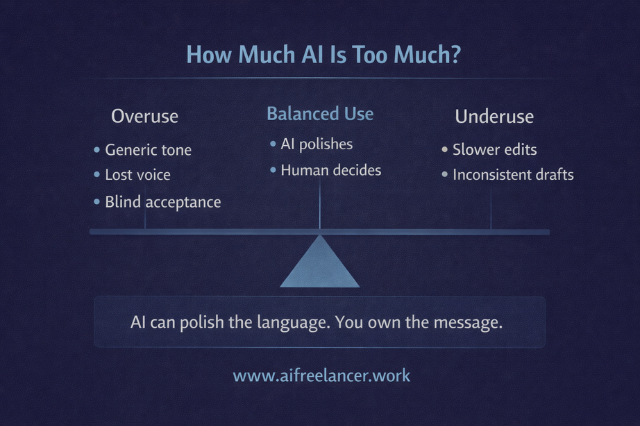
It is too much when your voice disappears, your ideas get watered down, or you start accepting suggestions without judgment. A good rule is this: AI can polish the language, but you should own the message.
AI can sound generic, miss nuance, or introduce factual errors. If you accept every suggestion, you risk losing your unique voice and weakening your own editing skills.
AI text is based on patterns and probabilities; it’s good at structure and surface-level polish. Human writing brings judgment, lived experience, and emotion. The best results come when AI handles the mechanics, and you handle the ideas and voice.

Florence De Borja is a freelance writer, content strategist, and author with 14+ years of writing experience and a 15-year background in IT and software development. She creates clear, practical content on AI, SaaS, business, digital marketing, real estate, and wellness, with a focus on helping freelancers use AI to work calmer and scale smarter. On her blog, AI Freelancer, she shares systems, workflows, and AI-powered strategies for building a sustainable solo business.