

Artificial intelligence for writers can sound like a promise to “10x your output” and a threat to “steal your job”—often in the same week. You don’t have time to decode hype, read research papers, or learn to code. You want to know: what is this technology, what can it actually do for my work, and how do I use it without losing my voice or values?
This pillar is your practical AI guide. We’ll walk through what AI is, how it works at a high level, where it shows up in creative work, and how to use it responsibly. Along the way, you’ll see key ideas in bold that point you to deeper dives if you want to explore a topic in more detail.
Recent industry surveys show that AI has moved well beyond the experimental stage. In McKinsey’s 2024 global AI survey, 65% of respondents said their organizations are regularly using generative AI, nearly double the share from the previous year. A separate Work Trend Index from Microsoft and LinkedIn reports that 75% of knowledge workers now use AI at work, often to save time and focus on higher-value tasks.
What you’ll learn:
- What AI is and how it actually works in plain language.
- The core building blocks behind the tools you already use as a writer or creative.
- Where AI fits into your writing workflow today—and where it doesn’t.
- How to avoid common myths, fears, and ethical pitfalls while you experiment.
Everything I’ve shared here—and more—is in my book, available on Amazon. Click the link if you’re ready to take the next step.
What Is Artificial Intelligence for Writers, Really?
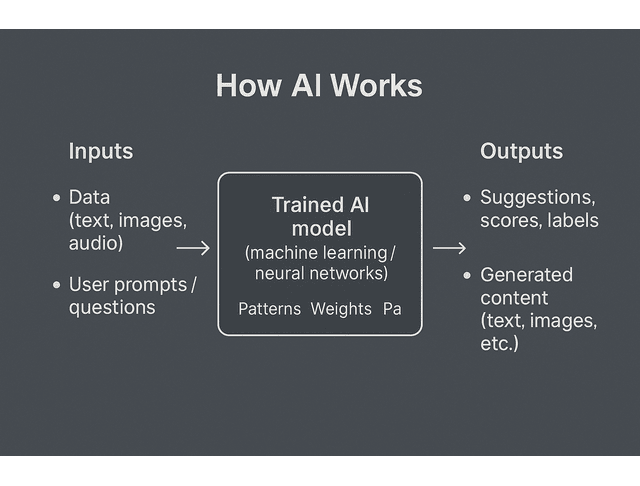
For writers and creatives, you can think of AI as software that takes on jobs we’d normally associate with human intelligence—spotting patterns, working with language, making predictions, and producing original content.
If you want a deeper breakdown of the basics, start with a comprehensive AI guide for non-technical creatives. That article goes into more detail about where AI came from, the main types you’ll hear about, and what today’s tools can and can’t do.
To work with AI instead of feeling overwhelmed by it, you also need core AI concepts you need to know. These include ideas like:
- Data: the examples a system learns from.
- Models: the mathematical structures that learn patterns in that data.
- Training: how those models adjust themselves based on examples and feedback.
- Inference: the “runtime” phase, when the model uses what it learned to answer a question or generate output.
Broader business data suggests this trend will only continue: a 2025 synthesis of global AI adoption statistics notes that about 35% of companies worldwide already use AI in their operations, and 77% are either using or actively exploring it.
The Building Blocks of Artificial Intelligence for Writers
Most of the tools you use today—chatbots, image generators, AI writing assistants—run on two big families of techniques: machine learning and natural language processing.
Machine Learning and Neural Networks
Machine learning is about teaching systems to learn from examples rather than hard-coding every rule. Neural networks are one specific way of doing that, inspired (loosely) by how brains work.
If you’re curious about what’s happening under the hood, machine learning and neural networks explained for creatives breaks it down with real-world examples: spam filters, recommendation engines, and the systems inside many AI writing tools.
The key point: when you see a tool that gets “better” the more you interact with it, you’re probably using some form of machine learning. At a high level, here’s how the most common AI types show up in writing work:
- Know when a tool needs more examples or clearer prompts.
- Recognize its limits when the data is biased, outdated, or incomplete.
- Avoid expecting “human” understanding from what, at its core, is pattern matching.
Natural Language Processing (NLP)
For writers and freelancers, the most relevant branch of AI is NLP—technology that lets computers work with human language.
Everything from autocomplete in your email to advanced chat-based assistants runs on some flavour of NLP. These systems can:
- Summarize long documents.
- Rewrite text in different tones.
- Answer questions based on a body of content.
- Generate drafts from prompts or briefs.
To see how this applies directly to your work, explore natural language processing for freelance writing. It shows how NLP powers brief extraction, research support, and draft-building workflows that save time without handing over creative control.
| Type of AI | What It Does | Example for Writers |
|---|---|---|
| Machine Learning | Finds patterns, predicts, classifies | Spam filters, lead scoring |
| NLP | Understands and works with language | Summaries, rewrites, Q&A |
| Generative AI | Creates new content from patterns | Finds patterns, predicts, and classifies |
How Artificial Intelligence for Writers Entered the Creative World
AI didn’t suddenly appear with chat-based tools. It’s been creeping into creative work for decades.
How Artificial Intelligence for Writers Evolved in Creative Industries
Early “creative” AI appeared in tools such as music composition experiments, generative art projects, and game design systems. Most of these lived in labs and niche communities.
As computing power increased and algorithms improved, AI started moving into mainstream creative software: autocorrect, smart filters in design tools, recommendation algorithms on platforms, and more.
For a clearer timeline with concrete examples from music, film, design, and advertising, check out the evolving role of AI in creative industries. It traces how we got from rule-based systems to today’s generative models, and what that shift means for working creatives.
Innovations That Changed the Landscape
The jump you feel today—the sense that AI suddenly became “good enough” to help with real client work—came from a handful of breakthroughs. Technologies like deep learning, transformer models, and diffusion models enabled the generation of convincing text, images, and audio at scale.
Suppose you want to understand why everything suddenly accelerated in the last few years. In that case, recent innovations in AI that changed creative work walk through those shifts in plain language. Knowing this history helps you see which changes are fundamental and which are just marketing cycles. It also sets the stage for how these shifts now show up in your day-to-day work as a writer or content creator.
And this isn’t abstract for the creative world: a recent Adobe-backed survey of 16,000 creators found that 86% already use generative AI in their workflows, and 81% say it helps them produce content they couldn’t have created otherwise.
Artificial Intelligence for Writers: From Drafting to Editing
For writers, AI has moved from novelty to an everyday tool. The question is no longer “Should I use it?” but “Where does it make sense in my workflow?”
Current Use Cases
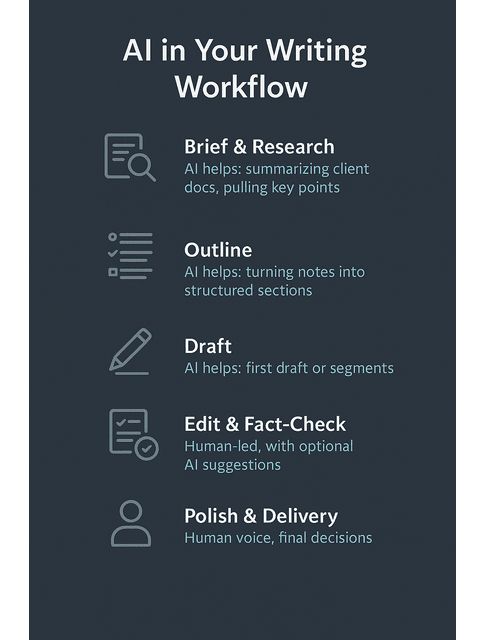
In practice, artificial intelligence for writers shows up in a few familiar places:
- Brainstorming angles and headlines.
- Turning messy notes into structured outlines.
- Producing rough first drafts, you can then refine.
- Rewriting for different tones or reading levels.
- Generating quick variants for ads, emails, and social posts.
- Assisting with SEO tasks like keyword expansion and meta descriptions.
The article current applications of AI in writing dives deeper into each of these, with examples and sample workflows. It also covers where AI struggles: deep subject-matter nuance, sensitive topics, and anything that requires lived experience.
Across marketing teams, adoption is even more pronounced: a 2025 state-of-AI-in-marketing report found that 85% of marketers now use AI tools specifically for content creation. That has direct implications for freelance writers who work with marketing-led clients and content teams.
Working With AI as a Freelance Writer
Many freelancers quietly use AI as a research assistant, editor, or drafting partner. The challenge is using it in a way that protects your voice, quality standards, and client relationships.
If you want to integrate AI into your services without undercutting your value, natural language processing for freelance writing shows how to position AI as part of your process, not a replacement for your skills. It covers:
- Where to keep AI “behind the scenes” vs. where to be transparent.
- How to structure offers that include AI support.
- How to maintain your voice when tools generate raw material.
Where Artificial Intelligence for Writers Might Go Next
In the near term, expect AI to become more embedded in your existing tools: CMS platforms, email service providers, design suites, and project management systems. You’ll also see more domain-specific models trained on particular industries or brand voices.
If you want a grounded look at what’s realistic (and what’s hype), future potential of AI writing tools sketches out plausible scenarios for the next few years—and what skills will help you stay adaptable. As these tools spread and become more visible in your workflows, it becomes even more important to separate quiet, personal worries from the louder claims and fears swirling around AI.
Misconceptions and Myths About Artificial Intelligence for Writers
Many of the biggest misunderstandings about artificial intelligence for writers come from fear, hype, or assumptions about what these tools can do. Creative professionals often carry quiet concerns about AI that shape their decisions more than the technology itself. Some come from personal worries, others from loud marketing claims.
Misconceptions That Hold Creatives Back
These are the internal stories that can stop you from experimenting at all:
- “If I use AI, clients will think I’m cheating.”
- “If I don’t learn everything now, I’ll be left behind forever.”
- “You need to be technical to get real value from AI.”
The piece addresses common misconceptions about AI for writers, directly confronting these fears with examples from freelance and agency work. The goal isn’t to convince you to love AI—it’s to help you see it clearly enough to make informed choices.
Hype vs. Reality
Then there are the big, loud promises that come from tools and headlines:
- “AI will replace professional writers entirely.”
- “AI understands creativity and meaning like a human.”
- “You can automate your entire business while you sleep.”
To cut through this, debunking popular AI myths in content creation compares the promises you see in marketing to how these systems actually behave. Understanding these limits helps you design workflows where AI supports your work instead of creating rework and risk, and it naturally leads to questions about how to use these tools responsibly.
Using Artificial Intelligence for Writers Responsibly and Ethically
As soon as you bring AI into client projects, you’re dealing with more than productivity. You’re making choices about data, attribution, and integrity.
Everyday Ethics and Best Practices
Ethical questions show up in small decisions:
- Are you feeding confidential client material into third-party tools?
- Are you relying on AI-generated facts without verifying sources?
- Are you transparent enough about your process for your type of work and client expectations?
The article ethical considerations when you use AI in your creative business lays out practical examples and risk areas specific to writers and freelancers.
You don’t need a 30-page policy to act responsibly. Simple guidelines go a long way:
- Fact-check AI-generated content and cite sources.
- Avoid dropping sensitive data into tools that don’t guarantee privacy.
- Use AI to assist, not to pass off unedited drafts as your own expertise.
- Set personal boundaries on when you will and won’t use AI.
If you want a concise checklist you can adapt into your own guidelines, best practices for responsible AI use in writing offer one you can keep beside your desk or client onboarding docs.
Getting Started With Artificial Intelligence for Writers
When introducing artificial intelligence for writers into your workflow, the safest approach is to start with a single step. If you’re new to this, it’s tempting to either ignore AI completely or try to adopt everything at once. Neither is sustainable.
Choosing Your First Artificial Intelligence for Writers Tools
Start by choosing one or two tools that directly support your current work. That might be:
- A writing assistant you use for outlines and rewrites.
- A note-summarizing tool for long briefs and research packs.
- A simple automation that organizes client inputs.
The high-level concepts of machine learning and neural networks, explained for creatives, help you read feature lists with a more critical eye. You’ll know whether a tool is trying to predict, classify, or generate—and what that means for your workflow.
A Simple, Safe Experiment
You don’t need to rebuild your business around AI. Instead:
- Pick one project type you already deliver (e.g., blog posts or email sequences).
- Identify one step that feels repetitive or draining (e.g., creating outlines).
- Use AI to support that step only, keeping everything else as-is.
- Compare time saved, energy, and quality across a few projects.
This kind of focused test will tell you far more than generic promises or fears. You can then expand your AI use where it clearly helps and skip it where it doesn’t.
Final Thoughts: Artificial Intelligence for Writers
AI is not a magic wand, and it’s not the end of creative work. It’s a set of tools you can learn to use, shape, and constrain to support your practice.
By grounding yourself in a comprehensive AI guide for non-technical creatives, understanding the current applications of AI in writing, and following ethical considerations when you use AI in your creative business, you can build a workflow that protects your voice, your clients, and your energy.
Use the bold phrases as your jumping-off points—start with whatever you need most right now, whether that’s nailing the fundamentals, stress-testing your fears about AI, or mapping out a responsible workflow that supports your best work. Instead of chasing every new tool, focus on building a steady, sustainable way of working where AI handles the heavy lifting, and you stay firmly in charge of the ideas and direction.
Want something practical you can actually use?
Download the AI Workflow & Ethics Checklist for Writers—a multi-page guide that walks you through responsible AI use, accountability checks, and ethical risk scans you can apply before every client delivery.
If you want a practical, non-technical guide to using AI without losing your voice, explore my books on Amazon. They cover the essentials, real writing workflows, and ethical guardrails so you can use AI with confidence and stay in control. Visit my Amazon Author page to pick the guide that fits what you need right now.
Frequently Asked Questions About AI for Writers and Creatives
AI can speed up your process, but it can’t stand in for your judgment, experience, or the relationships you’ve built with your clients. Writers who know how to direct and refine AI output often become more valuable because they ship better work faster without surrendering the thinking or the voice that makes it theirs.
No. Most tools built for writers and creatives have simple, interface-based workflows: text boxes, buttons, and toggles. A basic grasp of core AI concepts you need to know is far more useful than technical coding skills because it helps you choose and direct tools intelligently.
Treat AI the same way you’d treat any third-party contractor or service. Protect confidential information, fact-check anything you publish under your name, and be clear with clients about your process when it affects scope, pricing, or expectations. The guidelines for ethical considerations when you use AI in your creative business are a good starting point.
Start small. Choose one project type and one step in your workflow that feels repetitive, run the simple, safe experiment outlined above, and compare the results. You’ll get real data on what helps, what doesn’t, and where AI genuinely supports your work instead of distracting you.
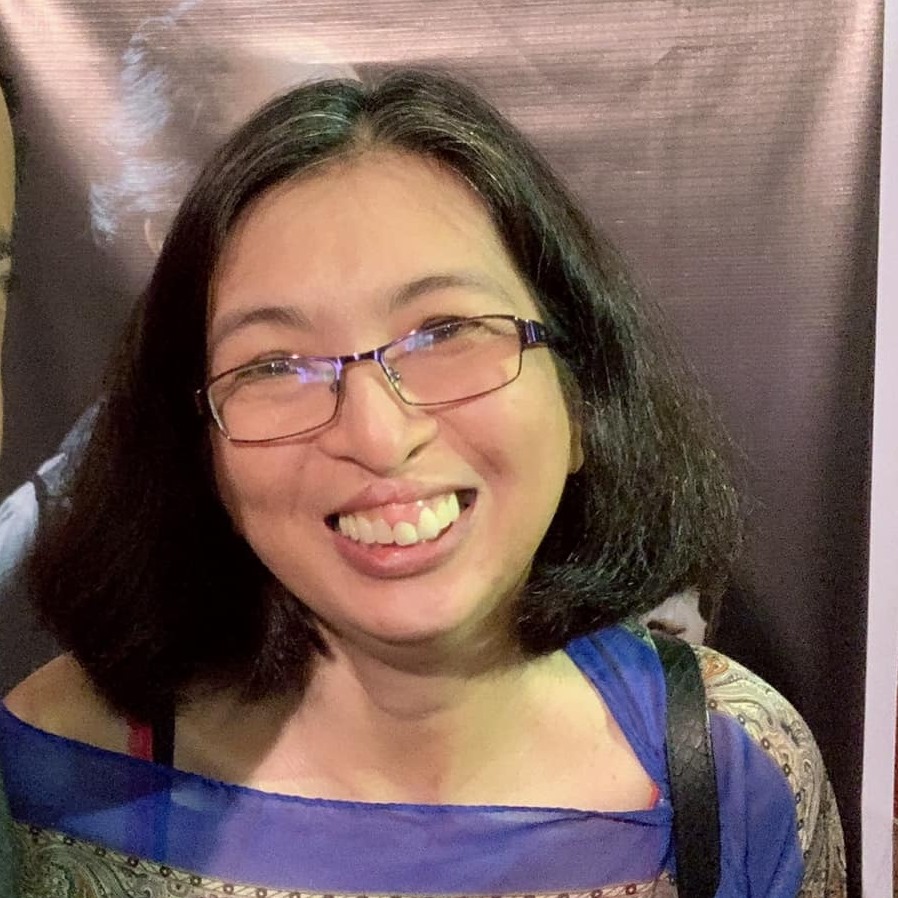
Florence De Borja is a freelance writer, content strategist, and author with 14+ years of writing experience and a 15-year background in IT and software development. She creates clear, practical content on AI, SaaS, business, digital marketing, real estate, and wellness, with a focus on helping freelancers use AI to work calmer and scale smarter. On her blog, AI Freelancer, she shares systems, workflows, and AI-powered strategies for building a sustainable solo business.

Pingback: AI Guide: Understanding Artificial Intelligence - The AI Freelancer
Pingback: Misconceptions about AI: Separating Fact from Fiction - The AI Freelancer