
You put your best work into a blog or email sequence, only to watch it quietly die in Google Analytics. You see a few clicks, almost no time on page, and zero replies. Meanwhile, clients keep asking for “better engagement” and “content that converts,” but they don’t give you more budget or hours. That gap between what you write and how audiences respond is exactly where AI content personalization can change the game for you and your clients.
Instead of sending out one blog post to everyone, personalization lets you put the right piece of content in front of the right reader. You move from blasting a single, generic message to steering each person toward something that feels relevant to them. When you help clients do that, you’re not just handing over text anymore—you’re helping design a clearer path that nudges readers toward the actions those clients care about.
This blog will walk you through how AI-driven personalization works, how recommendation systems plug into your content, and what simple workflows you can actually use as a busy freelance writer.
Everything I’ve shared here—and more—is in my book, available on Amazon. Click the link if you’re ready to level up.
How AI Content Personalization Works for Writers
You don’t need a data science degree to benefit from personalization; you need to understand what’s happening behind the scenes. When you see it as “the right message, to the right reader, at the right moment,” AI content personalization suddenly feels less like magic and more like a set of levers you can actually pull as a writer.
AI Content Personalization vs One-Size-Fits-All Blogging
With traditional blogging, you publish one article and hope it reaches as many people as possible. With AI content personalization, your site, emails, or app actively change what they show based on each reader’s behavior, interests, and context.
In practice, that might mean a first-time visitor sees a simple beginner’s guide. In contrast, a returning reader sees a detailed case study. Someone who has read three articles on a specific topic might see more advanced recommendations instead of another basic explainer. A visitor who lingers on the pricing page might start seeing content that answers objections or compares options. At the same time, someone who only reads high-level posts continues to see educational content.
Research from firms like McKinsey and others shows that most customers now expect brands to know them and adapt to them. One McKinsey analysis found that 71% of consumers expect companies to deliver personalized interactions, and 76% get frustrated when this doesn’t happen. When experiences stay generic, people lose interest quickly and look elsewhere. As a writer, your job is to make those personalized experiences clear, helpful, and human.
Core Concepts: Data, Segmentation, and Dynamic Content
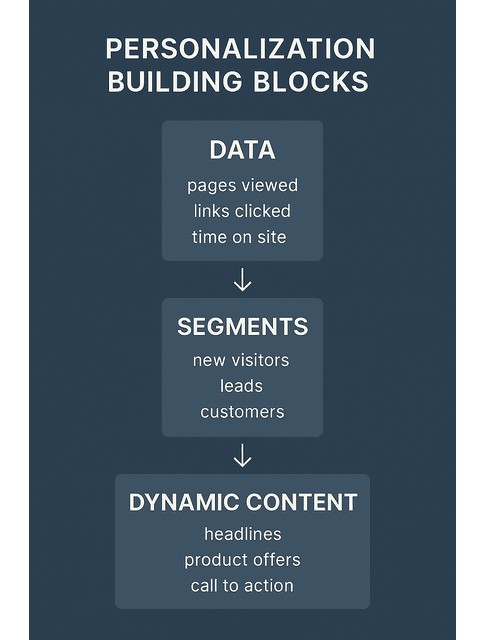
Most AI-driven personalization rests on three simple building blocks: data, segmentation, and dynamic content.
Data is what people actually do. This includes the pages they view, the links they click, how long they stay, the forms they fill out, and the purchases they make. Tools use this data to make educated guesses about what someone might want next.
Segmentation is how you decide who you are talking to, grouping people in useful ways such as new visitors versus returning visitors, leads versus customers, or different roles and industries, so you can match each group with content that fits their needs.
Dynamic content is what they see. It’s any part of a page or email that can change depending on the person viewing it: headlines, product blocks, recommended posts, calls to action, and even examples or case studies.
You don’t have to code the system. Your job is to feed it strong content options: clear headlines, focused body copy, relevant offers, and concrete examples for the right segment at the right time.
Where Writers Fit in the Personalization Tech Stack
Behind the scenes, your clients might be using customer databases such as HubSpot, Salesforce, or Klaviyo; website platforms with personalization features; and recommendation tools that suggest what to show next. You don’t need to master every tool in the stack. You do need to understand how your content plugs into it.
Your role is to draft modular content: short sections such as hero copy, benefit statements, FAQs, stories, and social proof that you can reuse across different pages and experiences. You also write with each stage of the journey in mind—first touch, research mode, and ready to buy—so the reader always has a relevant next step. Finally, you work with your client or their strategist to define simple rules, such as “if the visitor is new, show the beginner guide” or “if they already subscribe, show a case study instead.”
In other words, you make sure the “personalized” experience actually feels useful instead of random.
Using AI Content Personalization to Power Recommendations
Your best-performing content often ends up buried three clicks deep, where almost no one ever finds it. Smart recommendation systems surface the next most useful piece right in front of the reader. When you connect your articles, guides, and case studies to these AI-driven suggestions, every click becomes a chance to keep the conversation going and move someone closer to becoming a client.
Turning Browsers Into Subscribers With AI Content Personalization
Recommendation systems are one of the most visible forms of personalization. Think about the “You might also like” or “Recommended for you” sections you see on blogs, ecommerce sites, and streaming platforms. The same idea applies to your clients’ content.
For your clients, this might look like suggesting a related blog post right after someone finishes reading an article, recommending a lead magnet that matches the visitor’s industry or role, or surfacing a relevant case study after someone has viewed the pricing page. When recommendations are personalized and truly relevant, people stay longer, click more, and are more likely to subscribe, download, or enquire. That extra engagement translates directly into more leads and more revenue.
When you can show that your content plays a key role in those results, your value as a writer becomes very tangible.
How Recommendation Engines Read Behavior and Interests
Most content recommendation systems follow a simple pattern. First, they track behavior, including which pages someone visits, how far they scroll, what they search for, and which links they click. Then they use that behavior—often with machine learning models—to build a basic profile, such as “new visitor,” “interested in onboarding,” or “comparing tools.”
At the same time, you or your client tags each piece of content by topic, level, and stage. For example, you might label an article as “employee onboarding,” “beginner,” and “awareness.” In contrast, you label a case study as “enterprise onboarding,” “advanced,” and “decision.” The system uses those tags to match each person’s profile to the right content and then chooses the next most helpful piece to show.
Your job as a writer is to aim each piece at a specific reader so the system can guide them effectively. That starts with being clear about who the content speaks to, what problem it tackles, and where it belongs in the overall journey. It also helps to keep your language consistent across headings, intros, and summaries so the tools can easily match each piece to the right audience. When you write sharp titles and clear descriptions, the recommendations feel intentional and helpful—not like a random list of links.
A simple way to think about it is this: the AI acts like a librarian, trying to hand each reader the right “book” at the right time. You are the one writing those books and labeling them so the librarian can understand.
Mapping Reader Journeys From First Click to Loyal Fan
Personalization becomes powerful when it supports a journey rather than just serving random “you might also like” links.
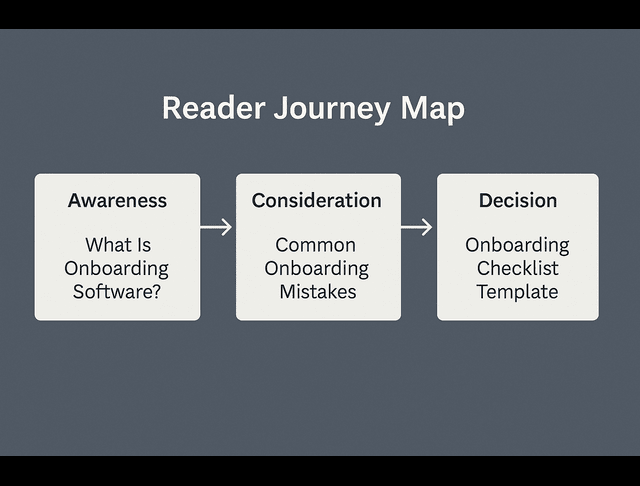
Imagine someone searching for “what is employee onboarding software.” They land on a high-level explainer you wrote. At the end of that article, the site recommends another piece: “five common onboarding mistakes to avoid.” After reading about the mistakes, the reader sees and clicks on an “onboarding checklist template.” Once they download the checklist, the next recommended piece is a case study or a demo invitation that shows how a specific tool works in a real company.
In that sequence, your content guides the reader from awareness to consideration to decision. Personalization and recommendation systems help ensure the right piece appears at each moment. As the writer, you design each step so it feels like a helpful, logical next move rather than a hard sell.
That kind of thoughtful journey design also pays off over time: Twilio Segment’s 2023 State of Personalization report found that 56% of consumers say they will become repeat buyers after a personalized experience.
Building Simple AI Content Personalization Workflows
The biggest lie about personalization is that you have to rebuild everything from scratch. In reality, you can get meaningful results by layering simple rules and small AI-powered tweaks on top of content you already have. A few clear segments, some modular copy, and the right tools can turn your usual “publish and pray” workflow into a focused, personalized content marketing engine.
Tools to Start: Email, CMS, and No-Code Platforms
It’s often enough to start with the tools your clients are already paying for.
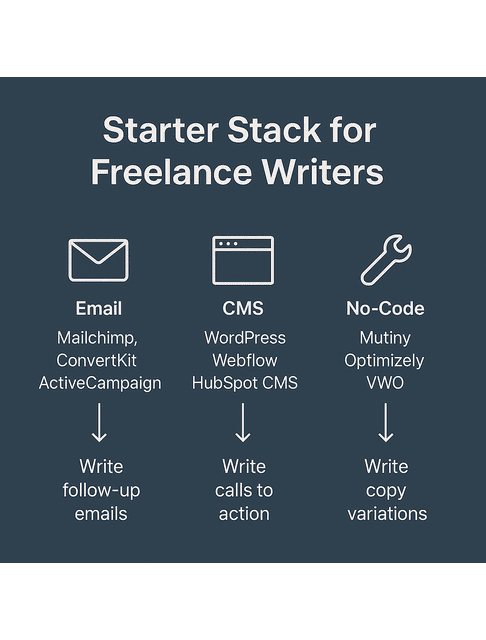
In email platforms like Mailchimp, ConvertKit, or ActiveCampaign, you can segment subscribers based on whether they opened or clicked a campaign and then send different follow-up messages accordingly. New subscribers might receive an introductory series, while engaged readers get deeper dives and invitations to webinars or demos.
On website platforms such as WordPress (with personalization plugins), Webflow, or HubSpot CMS, you can show different calls to action or recommended posts depending on how someone arrived on the site. A visitor from social media might see content that introduces the brand. In contrast, a visitor from a pricing page might see content that answers buying questions.
No-code tools such as Mutiny, Optimizely, and VWO let you set up simple tests quickly. You can try two versions of a headline or hero section with different segments, and keep the one that delivers stronger results.
As a writer, you don’t have to configure every setting. Still, you can offer to write the variations these tools need: extra headlines, alternative intros, different CTA lines, and slightly different versions of key pages for each segment.
Setting Up Segments and Personas for Key Audiences
For a busy freelance writer, a small number of practical segments is enough to get started.
You can start with something as simple as separating new visitors from returning ones. People arriving for the first time usually need orientation—what the topic is, key terms, and the big picture—while repeat visitors are ready for deeper detail, concrete examples, and clear next steps.
Another helpful split is leads vs customers. Leads are still deciding whether to buy, so they need comparison, proof, and reassurance. Customers, on the other hand, need guidance on how to use the product effectively, identify quick wins, and uncover additional features.
You can also segment by industry or role, so your tone and examples speak directly to groups like SaaS founders, HR managers, or operations leaders, rather than trying to talk to everyone at once.
You don’t need a forty-page persona document. What you need is a clear answer to three questions for each segment: what this group cares about most right now, what might be stopping them from taking the next step, and what small action you want them to take next, whether that is subscribing, downloading something, or booking a call.
Once you know those answers, you can design content paths that move each group forward step by step.
Testing Headlines, CTAs, and Content Paths
AI content personalization works best when you measure and adjust as you go. That doesn’t mean you need a complex analytics setup. It just means you decide what you want to test and what success looks like.
You might start by testing two or three headlines for your most important articles, asking which one leads to more clicks and longer time on page. You can also test several calls to action—“download the guide,” “book a strategy call,” or “get pricing”—and watch which one gets the most clicks. Then, play with different orders of recommended posts and measure how far readers progress through each sequence.
The key metrics to watch are the ones you already know: click-through rates on links and buttons, time on page, scroll depth, and conversions such as signups, demo requests, or purchases. Over time, you can also look at repeat visits and whether people keep engaging with your client’s content.
Your deliverable to clients can include a simple test plan explaining what you’ll test and for how long, the alternate versions of the copy, and a summary of what worked and what should stay. That kind of basic testing and reporting is often enough to move you out of the “generic blog writer” category and into a more strategic role.
Selling AI Content Personalization to Better Clients
Clients don’t wake up wanting “more blog posts.” They want proof that content is driving business results. When you can connect your writing to higher engagement, more qualified leads, and better conversions through AI content personalization, you stop competing on word count and start charging for outcomes. That shift is what attracts better clients and justifies premium rates.
Client-Facing Reports That Highlight AI Content Personalization
Clients usually don’t want to hear about segmentation rules or model types. They want simple, clear results.
When you put reports together, keep the focus on how personalization changed the core metrics you already track. Show that visitors spend more time on key pages, scroll further, and return more often once personalized content and recommendations go live. Highlight any lift in subscribers or qualified leads tied to specific personalized offers or tailored lead magnets. It also helps to include how many people clicked from a recommended post or personalized CTA through to a product page, demo booking page, or sales page.
Even a basic before-and-after comparison can be powerful. For example, you can show that after you add personalized recommendations, readers view almost twice as many pages per visit, or that a tailored CTA version earns significantly more clicks than a generic one. When you frame your work this way, clients clearly see how your writing connects to the metrics they care about.
Packaging Personalization as a Premium Service Tier
Once you are comfortable with the basics, you can start packaging personalization into your services.
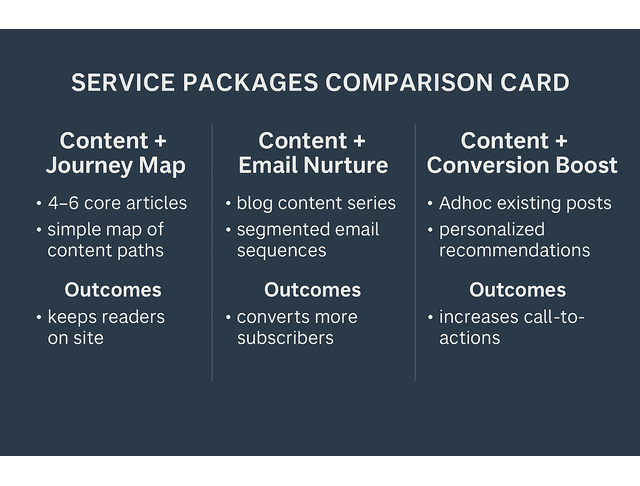
Instead of offering a simple bundle such as “five blog posts per month,” you might offer “content plus journey map,” where you create four to six core articles and a simple map showing which post should be recommended next for each segment. Another option is “content plus email nurture,” where you produce blog content and a set of segmented email sequences with basic personalization, so subscribers in different groups receive different follow-ups. You could also offer a “content plus conversion boost” package that focuses on updating existing posts with stronger calls to action and carefully chosen recommended resources for each segment.
These packages position you as a writer who thinks in systems rather than one-off pieces. Clients pay more because they’re not just buying words; they’re investing in a content engine built to perform better.
Talking ROI: Engagement, Click-Throughs, and Conversions
When clients ask whether all this effort is worth it, you don’t need to quote an exact return on investment. You need to connect the dots between personalization and the outcomes they want.
Personalized experiences usually lead people to spend more time on sites, click more links, and take more high-value actions. Over time, that additional engagement tends to translate into more leads, more sales calls, and more revenue. Companies that use personalization well consistently outperform those that treat everyone the same. McKinsey estimates that effective personalization can reduce customer acquisition costs by up to 50%, lift revenues by 5–15%, and increase marketing ROI by 10–30%.
If you present personalization as a way to make existing content work harder—to get more from the traffic and attention clients already have—most decision-makers will see the logic. That is a strong foundation for explaining why your “AI content personalization plus writing” package deserves higher fees than standard content work.
Final Thoughts
Suppose you’re tired of churning out content that disappears into the void. In that case, AI content personalization lets you directly connect your writing to outcomes clients care about: engagement, leads, and revenue.
Start with what you already have. Ask your current clients which segments matter most, such as new visitors versus existing customers or different industries. Suggest one or two simple personalization ideas for their blog or email list, such as tailored CTAs or a basic sequence of recommended posts. Offer to write the variations and help interpret the results.
Step by step, you’ll move from “content vendor” to strategic partner—the writer who understands both the story and the system that delivers it.
If you’re looking for a practical playbook on using AI content personalization without the hype, explore my books on Amazon. They show you how to build repeatable workflows, write variations that still sound like you, and prove results clients care about. Visit my Amazon Author page to select the guide that best suits your needs at this time.
Frequently Asked Questions About AI Content Personalization
AI content personalization uses artificial intelligence to tailor website content, emails, and offers to each person. It looks at behavior, such as pages visited and links clicked, and then shows content that’s more likely to be relevant for that individual.
AI personalization collects data like browsing history, clicks, time on page, and past purchases. It uses models to predict each person’s interests and automatically serves matching content, recommendations, or offers in real time.
AI content personalization helps people stay longer, click more, and take more meaningful actions for clients, which usually turns into higher engagement, better conversion rates, stronger loyalty, and more revenue from the same amount of content and traffic.
Freelance writers can create multiple versions of content for key segments and stages of the buyer journey, rather than writing a single generic piece. You can supply alternate headlines, intros, CTAs, and examples, and help clients outline simple “if they do this, show that” paths for blogs and email sequences.
You can gauge how well personalization is working by watching familiar metrics—click-through rate, time on page, scroll depth, and conversions like signups, demo requests, or purchases. When you compare those numbers for personalized pages or emails against their generic versions, you’ll see whether the customized experience is actually performing better.

Florence De Borja is a freelance writer, content strategist, and author with 14+ years of writing experience and a 15-year background in IT and software development. She creates clear, practical content on AI, SaaS, business, digital marketing, real estate, and wellness, with a focus on helping freelancers use AI to work calmer and scale smarter. On her blog, AI Freelancer, she shares systems, workflows, and AI-powered strategies for building a sustainable solo business.