
AI for freelance writers is supposed to make writing faster. But instead of saving time, you end up fixing awkward sentences, adjusting tone, and second-guessing the output. What should feel like leverage starts to feel like extra work.
This is where most freelancers get stuck. The problem isn’t the tool. It’s how the work is structured around it. AI only works when it’s part of a clear workflow. Without that structure, it creates friction. With it, AI becomes a practical layer that reduces effort, improves consistency, and gives you more control over your output.
Everything I’ve shared here—and more—is in my book, available on Amazon. Click the link if you’re ready to take the next step.
Why Most Freelance Writers Struggle with AI
Many freelancers adopt AI, expecting instant efficiency. What they experience instead is inconsistency. One day, the output is useful. The next step requires more editing than writing from scratch. That unpredictability is what makes AI feel unreliable.
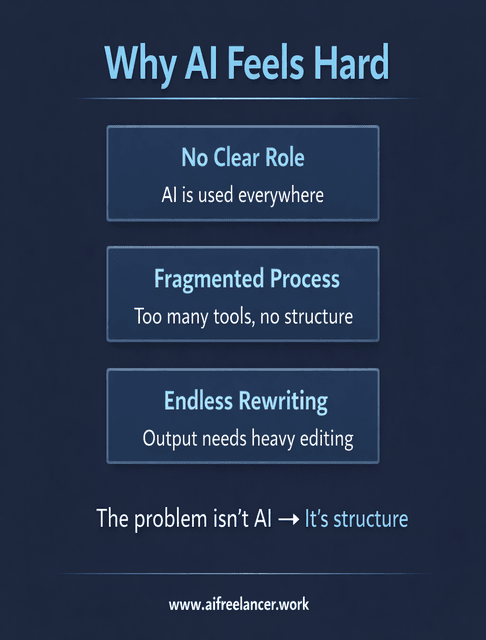
AI Without Workflow Creates More Work
When AI is used without a defined role, it tends to slow things down. Writers jump between tools, test prompts repeatedly, and end up rewriting large portions of generated text. Instead of simplifying the process, AI fragments it.
Research reported by MIT found that professionals using AI tools completed certain writing tasks about 40% faster, with measurable improvements in output quality. The improvement came not from the tool itself, but from how it was used within a defined process.
The Real Problem Isn’t AI—It’s Structure
Most writers haven’t decided where AI fits in their workflow. Without clear boundaries, AI becomes part of every step, and that creates confusion. You end up drafting, editing, researching, and restructuring all at once.
What a High-Performance AI Workflow Looks Like
A more effective approach separates each stage of work. You define direction before drafting, draft without editing, refine with focus, and only then expand the content. AI supports each stage, but it doesn’t drive the process. That distinction is what keeps the work controlled.
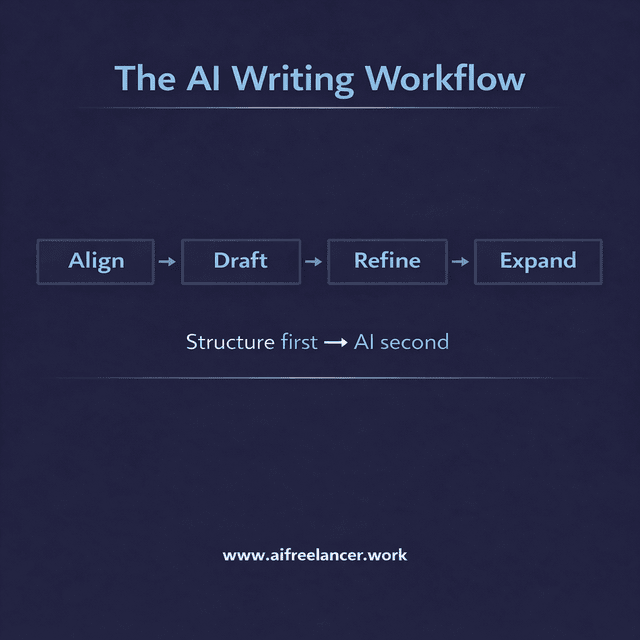
A Practical AI Workflow for Freelance Writers
If your process feels heavy, it’s often because too many decisions are happening at the same time. A structured workflow reduces that load and makes AI easier to use.
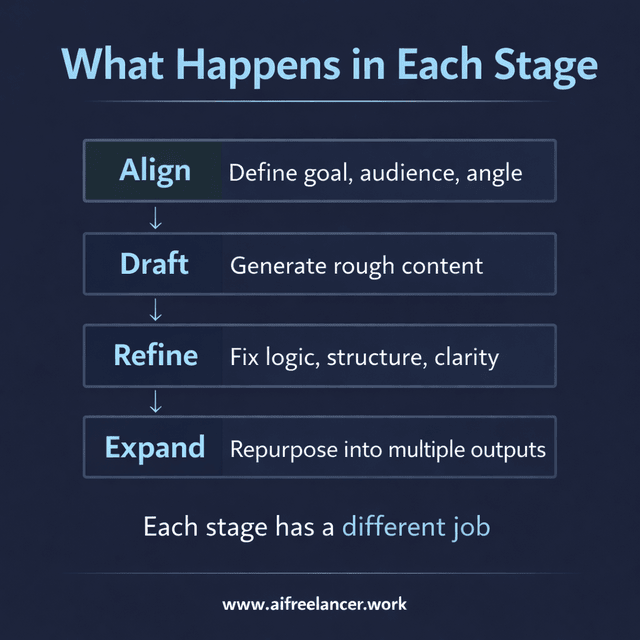
Stage 1 — Align (Direction Before Output)
This is where most writing problems begin. If the goal, audience, or angle is unclear, every step that follows becomes harder. Think of a typical client brief that says, “write a blog about productivity.” Without defining the audience, angle, and outcome, AI will generate generic content, and you’ll spend more time fixing it.
Use AI here to explore angles, not finalize them. Let it show you variations, then choose one direction and commit to it before moving forward.
Stage 2 — Draft Using AI
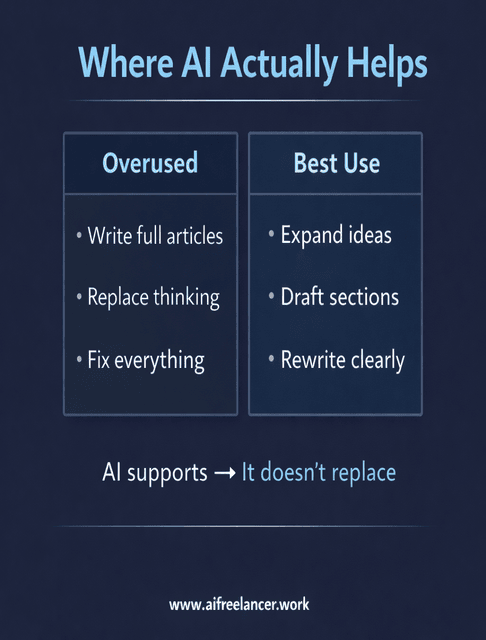
Drafting is where AI can create the most leverage. Instead of starting from a blank page, you can use it to expand your outline into rough sections. For example, if you’re writing a 1,500-word SEO article, you can prompt AI to generate a first pass for each section based on your structure. The key is to treat this output as raw material. You’re not trying to get a perfect draft. You’re trying to avoid slow starts.
Stage 3 — Refine (Where Quality Happens)
This is where most freelancers lose time, not because writing is hard, but because editing is unfocused. Many writers jump straight into sentence-level edits without fixing the structure first. A better approach is layered: fix weak arguments or missing sections, reorganize flow, and then tighten sentences.
AI can help rewrite paragraphs, but it won’t fix a weak structure. That’s why so many AI drafts feel “off” even when the sentences look fine.
Stage 4 — Expand (Repurposing & Scale)
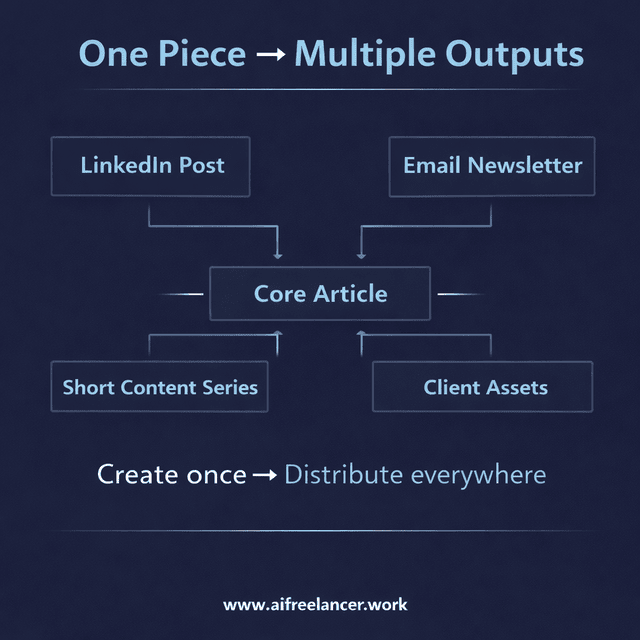
Once the core piece is strong, you can turn it into multiple assets. A client blog post can become a LinkedIn post, an email newsletter, or a short content series. This is where AI saves the most time, not in writing one piece, but in multiplying it.
The AI Concepts That Actually Improve Your Workflow
At this point, you already have a working structure. The next step is understanding which AI capabilities actually improve each stage so you can use tools with more precision and less trial and error.
Core AI Capabilities Every Freelance Writer Should Actually Use
Demystifying NLP for Writers
Natural Language Processing is what allows AI tools to interpret and generate text. In real freelance work, this shows up when you paste a messy interview transcript into a tool and ask for a summary, or when you turn scattered research notes into a structured outline.
The value is speed, but the limitation is accuracy. NLP tools don’t know which details matter to your client. For example, if you’re summarizing a 30-minute discovery call, AI may highlight general points while missing the one constraint that actually affects the deliverable. That’s where you step in.
This is also where content generation with NLP becomes useful, especially when you need to turn rough notes into usable draft sections. When the goal is compression rather than expansion, the same tools support text summarization with NLP by pulling key points from interviews, transcripts, and research material.
How GPT Models Transform Content Creation
Tools like ChatGPT are useful because they remove friction at the start of writing. Instead of staring at a blank page, you can generate a working draft in minutes.
According to McKinsey & Company, generative AI delivers the most value when applied to specific tasks within existing workflows, particularly in areas like writing and marketing. In practice, this means using it for focused tasks such as expanding outlines or rewriting sections, rather than expecting it to produce finished work.
A common mistake is asking AI to “write the full article” and then spending an hour fixing it. A better approach is to generate smaller sections tied to your outline, which reduces cleanup and keeps control in your hands.
Using Sentiment Analysis to Improve Tone in Freelance Writing
Tone issues are one of the most common reasons for client revisions. A piece may be structurally sound but feel slightly off, too formal for a startup, too casual for a professional service, or too promotional for an educational piece.
AI tools can flag tone inconsistencies. Use this as a diagnostic step, not a final decision. For example, if you’re writing a SaaS onboarding email and the tone feels too corporate, you can adjust specific phrases instead of rewriting the entire message. This makes revisions faster and more precise.
Machine Learning Basics for Writers (Only What Matters)
Machine learning affects many of the tools you already use. When an SEO platform suggests keywords or a writing assistant flags readability issues, it’s relying on patterns from large datasets. These suggestions are useful starting points, but they often reflect average-performing content. If you follow them too closely, your writing may become predictable. Use them to identify gaps or opportunities, then apply your own judgment to shape the final piece.
Some of these systems rely on patterns associated with supervised learning, while others surface relationships through unsupervised learning. In practical terms, these are the kinds of ML algorithms for writers that shape recommendations inside SEO, research, and writing tools.
Using AI for Freelance Writers to Make Better Content Decisions
Once you understand how these tools work, the next step is applying them beyond writing itself. This is where AI starts influencing not just how you write, but what you choose to write and why.
Predictive Analytics for Content Planning
AI tools can surface trending topics or high-volume keywords, but those signals need interpretation. For example, a keyword might show strong search volume, but if it doesn’t align with your client’s offer, it won’t convert.
A more effective approach is to use AI to generate a list of potential topics, then filter them based on audience intent, business relevance, and content gaps. This turns raw data into usable information.
AI-Driven Market Analysis for Freelance Writers
Instead of manually reviewing ten competitor articles, you can use AI to extract patterns across dozens. This helps you see what angles are overused and where there’s room to differentiate.
Large datasets make it easier to identify patterns that are difficult to detect through individual observation alone. In content work, this means identifying gaps, such as missing use cases or shallow explanations, that you can turn into stronger content. In practice, this often means analyzing industry data to spot repeated themes and weak angles. It also helps with predicting market trends so you can choose topics before they become saturated.
Targeting the Right Audience with AI
AI can analyze reviews, comments, and forums to surface how people describe their problems. For example, if you’re writing for a productivity app, you might notice that users consistently mention “overwhelm” rather than “time management.” That insight changes how you frame the content.
That is also where writers start customizing content strategy with AI, because the insights influence not just topics, but positioning and messaging.
Expanding Your Reach with AI for Freelance Writers
Once your content direction is clear, the next opportunity is extending the reach of what you’ve already created. This is not about producing more from scratch, but about adapting existing work in ways that increase its impact.
Personalization & Recommendation Systems (Applied to Content)
In freelance work, personalization becomes valuable when you are working with clients who serve multiple audience segments. For example, a B2B SaaS client may target founders, marketing teams, and operations managers. Instead of writing separate long-form pieces for each group, you can adapt a single core article by adjusting introductions, use cases, and calls to action.
AI helps generate these variations quickly. The practical benefit is not just efficiency, but positioning. You can deliver content that feels tailored without multiplying production time, which increases the perceived value of your work.
Multilingual Writing with AI
Multilingual work becomes relevant when you start working with global clients or companies expanding into new markets. AI tools like Google Translate and DeepL can reduce the time needed to create initial drafts in another language.
Tools such as Google Translate vs. DeepL are useful for early drafts, but the better choice depends on the type of content. This becomes critical when writing for global audiences and when localizing content for cultures instead of relying on direct translation.
Using AI to Improve Creativity Without Losing Your Voice
As you expand your content across formats and audiences, maintaining originality becomes even more important. This is where AI can either flatten your work or help you explore stronger ideas.
AI Tools That Enhance Creativity
In real projects, creativity often breaks down at predictable points, such as writing hooks, structuring arguments, or finding fresh angles on common topics. AI can speed up these moments by generating multiple options quickly.
For example, if you’re writing an article on a common topic like productivity, you can use AI to generate five different opening angles. Most will be average, but one or two may give you a direction you would not have considered. This reduces creative friction without replacing your perspective.
How to Keep Learning AI Without Losing Billable Time
As your workflow evolves, staying current matters, but not every update deserves your attention. The goal is to keep improving without disrupting your work.
Why Continuous Learning Is Now Part of the Job
AI tools evolve quickly. But most updates won’t affect how you work. The goal is to identify changes that improve your core tasks.
Filtering What You Learn and Apply
A practical approach is to tie learning directly to current projects instead of exploring tools in isolation. For example, if you are handling a research-heavy article, testing a summarization tool within that project makes the learning immediately useful.
Over time, it helps to rely on a short list of top AI news sources and insights from industry reports & journals instead of trying to follow everything.
Learning Through Community and Professional Circles
Communities become useful when they surface real use cases instead of theoretical discussions.
The real benefits of AI communities show up when they help you find tested workflows. That only works if you improve at navigating online AI forums and use them for collaborative learning.
When Events, Workshops, and Networking Are Worth It
Events are most valuable when they connect directly to your work. This includes making the most of AI conferences, attending major annual AI conferences, and joining specialized writing & tech workshops.
These environments also support networking strategies in AI events, help in building professional AI networks, and create opportunities for meeting industry leaders.
How to Evaluate, Adopt, and Integrate AI Tools for Freelance Writers
Once you’re clear on what’s worth learning, the next step is deciding what actually belongs in your workflow.
Experimenting with New AI Tools (Controlled Approach)
Test one tool on one task. For example, use a summarization tool for research notes on your next project. Compare how long it takes and whether the output is usable. This gives you a clear, measurable result.
The same mindset applies when testing tools through early access programs and understanding the benefits of beta testing.
Deciding What Stays and What Goes
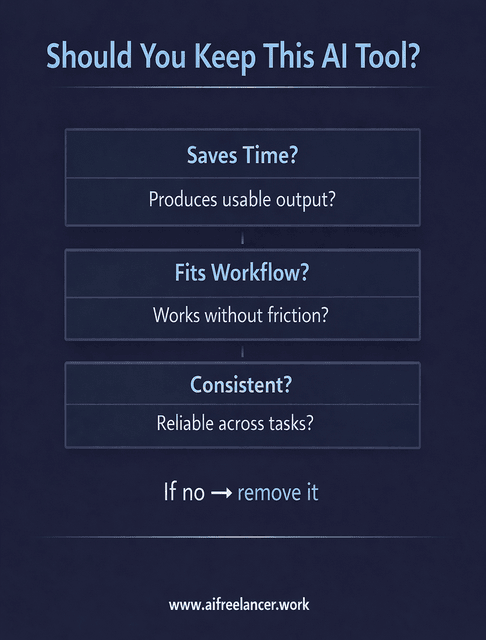
A tool should earn its place. Keep it if it consistently saves time or improves output. Remove it if it introduces extra steps, requires constant correction, or doesn’t integrate smoothly into your process.
When tools fall short, it becomes useful to provide feedback to developers while refining your approach to integrating innovative AI tools.
Building a Small AI Toolkit for Freelance Writers
After testing and refining your approach, the goal is to build a system you can rely on consistently.
What Makes an AI Tool Worth Keeping
A strong tool consistently solves the same problem.
Curating Must-Have AI Applications
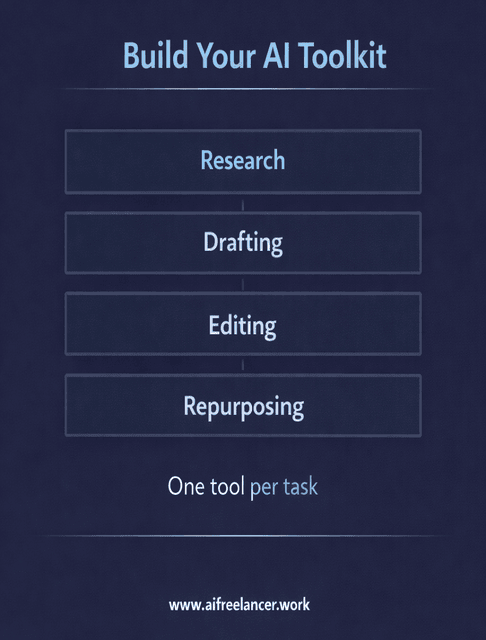
Instead of listing tools by popularity, define your core tasks first: research, drafting, editing, repurposing, and assign one reliable tool to each.
This is the foundation of building a personal AI toolkit. It also makes it easier to evaluate AI tools for niche markets, explore custom AI solutions for writers, and begin customizing workflows with AI in a way that supports long-term consistency.
Done well, this leads to enhancing creativity & efficiency instead of sacrificing one for the other.
Emerging AI Trends That Will Affect Freelance Writers
With a stable workflow in place, trends become easier to evaluate.
These shifts point to emerging AI applications for writers that are becoming more practical for real client work.
Staying Updated Without Burnout
A practical approach is to schedule a fixed time each week to review updates and test one new idea. This helps in staying updated with AI trends without disrupting your workflow.
Final Thoughts
AI is not the shortcut most freelancers expect. On its own, it often creates more work. But when it’s part of a structured process, it becomes a reliable support system.
AI for freelance writers works best when it strengthens your workflow, not replaces it. When you define your process, assign AI a clear role, and focus on what actually improves your output, you gain both speed and control.
If you want to go deeper into building systems that reduce revisions, improve clarity, and help you deliver better work faster, explore my books on my Amazon Author page.
Frequently Asked Questions About AI for Freelance Writers
AI helps streamline key parts of the writing process, including research, outlining, drafting, and editing. It reduces time spent on repetitive tasks so writers can focus on structure, clarity, and positioning. When used within a defined workflow, it improves both speed and consistency.
There is no single best tool because each one serves a different purpose. Some are better for drafting, others for editing or research. The most effective setup is a small set of tools that each handle a specific task within your workflow.
No. AI can generate text, but it lacks judgment, context, and the ability to adapt to client needs. High-quality writing still depends on human decisions, especially in areas like structure, messaging, and audience alignment.
Writers use AI to generate early drafts, outlines, or variations, then refine the output manually. The key is to control structure and tone during editing, so the final piece reflects a clear voice instead of generic phrasing.
Yes. Writers who understand how to integrate AI into their workflow can work faster and handle more projects without sacrificing quality. It also makes it easier to adapt as client expectations and content demands continue to evolve.

Florence De Borja is a freelance writer, content strategist, and author with 14+ years of writing experience and a 15-year background in IT and software development. She creates clear, practical content on AI, SaaS, business, digital marketing, real estate, and wellness, with a focus on helping freelancers use AI to work calmer and scale smarter. On her blog, AI Freelancer, she shares systems, workflows, and AI-powered strategies for building a sustainable solo business.